What happened
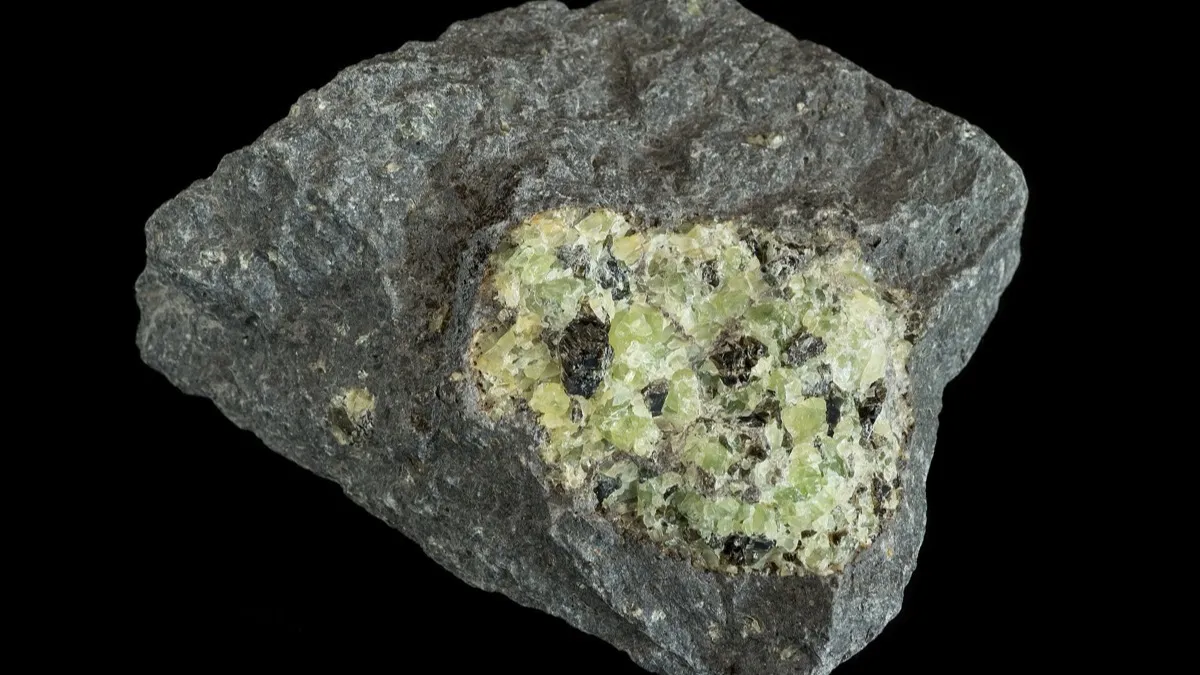
- On October 23, 2026, Communications Earth & Environment published an experiment on how crushed olivine, a silicate mineral, changes soil organic carbon.
- The team, from the University of California, Davis, Lawrence Livermore National Laboratory and the Technical University of Munich, kept soil microcosms for 55 weeks.
- Adding olivine alone reduced total soil organic carbon.
- Adding it together with glucose first held back microbial carbon uptake. By week 55, however, it raised microbial biomass and mineral-associated organic matter more than glucose alone and lowered carbon loss through respiration.
Why it matters
- Enhanced weathering, spreading crushed silicates on soils, is being studied as a way to pull CO₂ from the atmosphere. Its effect on the organic carbon already in the soil was uncertain.
- If the mineral reduces that organic carbon, part of the climate benefit is lost. The study shows the outcome depends on time and on the carbon available to microbes.
- The late gains grew alongside geochemical signs of mineral weathering.
The number
55 weeks. Length of the experiment, the time it took for the initial effect of olivine with glucose to reverse.
Context
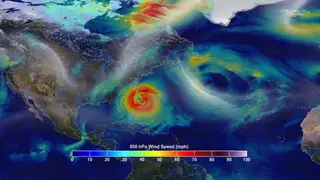
Nanoscale imaging showed that new organic carbon accumulates in organic and mineral microsites that already existed, not directly on the olivine or on newly formed clays. The authors conclude that, when labile carbon is available, enhanced weathering can increase soil carbon storage, mainly through microbial processing. It is a laboratory trial and still has to be tested in the field. Climate is also studied through better forecasts, such as the method that doubles the skill of the ECMWF model at weeks.
What’s next
- The next step is to check in field trials whether crops supply the labile carbon the effect needs.
- The result suggests measuring soil organic carbon, not only inorganic carbon, when assessing enhanced weathering projects.
Bottom line
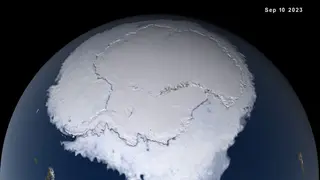
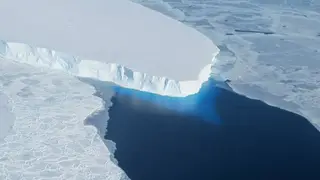
A mineral meant to capture carbon depends on microbes not to subtract what it adds. Other recent work measures climate through ice, such as the Baffin ice cap, Antarctic sea ice and Thwaites Glacier according to NASA.
Sources
- Communications Earth & Environment — Microbially mediated interactions between enhanced weathering and carbon inputs shift soil organic carbon dynamics (October 23, 2026)
- Cover image: Zbynek Burival, CC BY-SA 4.0, via Wikimedia Commons
Edited by Rodrigo Cornejo. How we select and verify: who writes these notes.