What happened
- On October 24, 2026, Phys.org republished the authors’ account of a study published in Royal Society Open Science: a new species of carnivorous dinosaur from the Isle of Wight, United Kingdom.
- It is called Invictibellatrix amberina and is known from the braincase of a fossil about 120 million years old, found on a beach near Sudmoor Point.
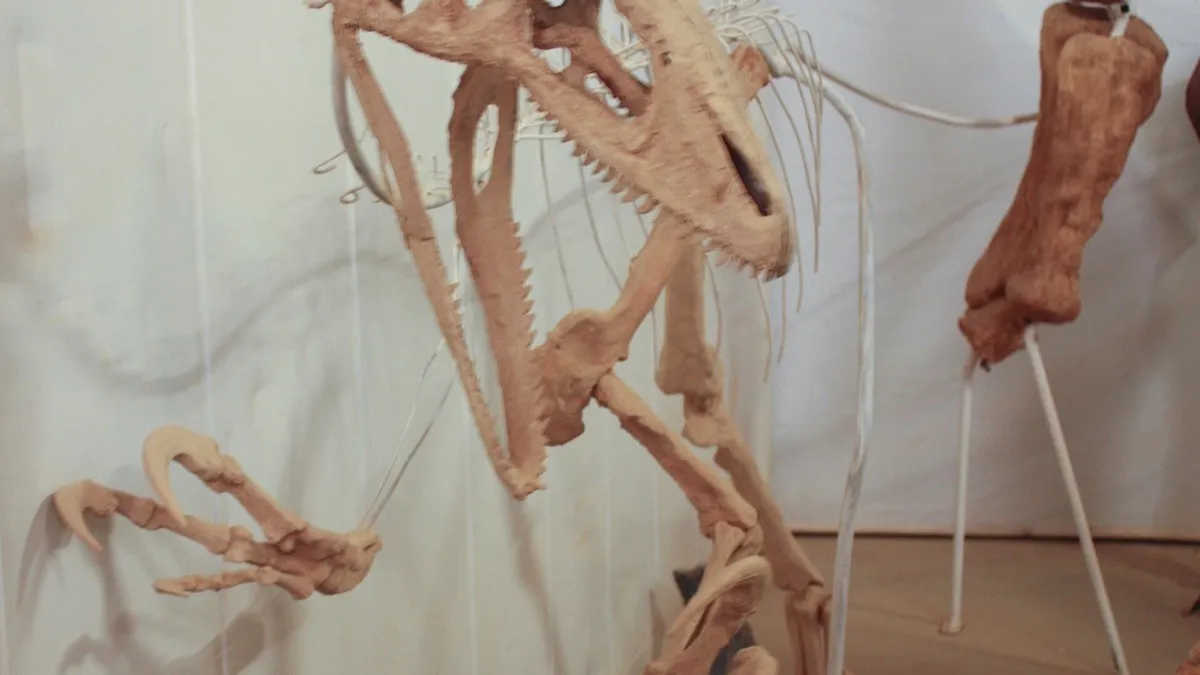
- It belongs to the megaraptorans, a group of carnivores with slender skulls and large hand claws, known mostly from South America. It measured about 5 meters and weighed as much as a large tiger, placing it among the smaller known megaraptorans.
- It is the first megaraptoran found in Europe. The fossil had been in the Natural History Museum’s collections in London for over a century, and paleontologist Paul Barrett recognized it in 2020.
Why it matters
- The authors argue that the find suggests the group reached the southern continents from Asia, via Europe and Africa.
- It also implies there may be megaraptorans still undiscovered in Africa and even Antarctica.
- The case shows the value of museum collections: the key piece had sat in storage for decades.
The number
5 meters. Estimated length of Invictibellatrix, about 16 feet, head to tail.
Context
The team compared the skull with those of other carnivores and used computed tomography to study the inside of the braincase. An algorithm placed the species in the theropod family tree. For the authors, the animal represents the early days of megaraptorans, before they grew to giant sizes, as happened with tyrannosaurs. It lived alongside other carnivores such as Neovenator, Ceratosuchops and Eotyrannus. The name means «unconquered warrior of the amber». The study was published on October 7 according to Crossref.
What’s next
- The authors say it is still unknown when megaraptorans first evolved.
- They call for new fossil searches in Africa and Antarctica.
Bottom line
Collections and ancient remains keep yielding data: proteins place two Xujiayao fossils as Denisovans and museum DNA places the origin of barn owls in the Caribbean. On past climates, a Baffin ice cap was regrowing toward a new ice age. And from another world, Chang’e-6 suggests KREEP is more spread out on the Moon’s far side.
Sources
- Phys.org — A long-clawed British dinosaur is the first of its kind in Europe (October 24, 2026; text written by the study’s authors)
- Study: Morrison et al., Royal Society Open Science, DOI 10.1098/rsos.260937 (October 7, 2026 per Crossref; the paper text was not read)
- Cover image: Talisen, CC BY 2.0, via Wikimedia Commons
Edited by Rodrigo Cornejo. How we select and verify: who writes these notes.