What happened
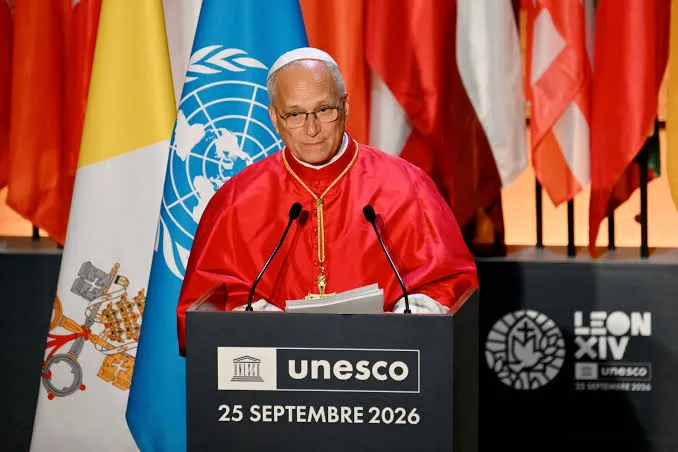
- On September 25, at UNESCO headquarters in Paris, Leo XIV devoted part of his speech to artificial intelligence. The text is published on the Holy See’s website.
- He noted that certain artificial systems “have even been given the name of our human faculty of thought, intelligence.”
- He drew the contrast directly: while intelligence is attributed to calculating systems, “we struggle to recognize the inalienable dignity of persons, whose lives are judged according to the criterion of efficiency.”
- On the limits: those systems “can correlate data” but “cannot answer questions concerning the meaning of human life, which is rooted in lived experience.”
- He added a point about false information (“artificial intelligence amplifies this problem”) and another about minors, where he asked that young people’s vulnerability “never become an opportunity for exploitation.”
Why it matters
- The speech reaches an audience that doesn’t overlap with that of technical reports: UNESCO is the body whose recommendation on the ethics of AI serves as a reference for public policy in several countries in the region, Chile among them.
- For anyone communicating an AI product, the framing shifts the axis of the discussion. It doesn’t ask whether the system works; it asks by what criterion the people on the other side are judged. That’s an argument that’s harder to answer with a demonstration of capabilities.
- The point about minors anticipates concrete regulatory pressure in the markets where UNESCO carries weight. Anyone designing products with young users has a new vector there.
The number
1 of the 4 passages on technology is aimed specifically at minors.
Context
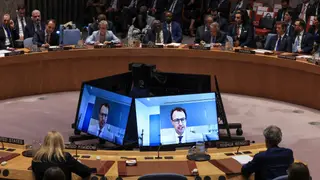
In September the institutional debate on AI moved to forums that aren’t technical: the UN Security Council met on the subject and several industry figures came out to talk about systemic risk. This speech is part of that series, with a difference in method: it doesn’t discuss capabilities or timelines; it discusses the criterion by which a person’s value is measured.
What’s next
- The trip continued on September 26 and 27 in Paris and Lourdes, with speeches published on the Holy See’s website.
- No timelines announced for a specific doctrinal document on artificial intelligence.
Bottom line
In 2025 the Holy See published a text on artificial intelligence that almost nobody in the industry read. This speech made the same argument in two sentences and inside UNESCO headquarters, which is where the argument has administrative consequences.
Sources
- Leo XIV’s speech at UNESCO headquarters, September 25, 2026
- Our previous coverage: the UN Security Council session on AI, Bill Gates’s warnings about the period ahead and the study on AI companions and well-being.
Edited by Rodrigo Cornejo. How we select and verify: who writes these notes.