What happened
- Nature Communications published on 29 October 2026 a method to automatically extract the laboratory steps described in published chemical synthesis procedures.
- The authors are five researchers from the Instituto Superior Técnico of the University of Lisbon, IBM Research Europe in Rüschlikon (Switzerland) and the Swiss NCCR Catalysis centre. They include Daniel P. Costa, Matteo Manica, Teodoro Laino and Pedro S. F. Mendes.
- The method does not require training a model on labelled data. Field knowledge is encoded in an explicit set of possible actions, such as mixing, heating or filtering, and an available large language model (LLM) turns the text into an ordered sequence of those actions.
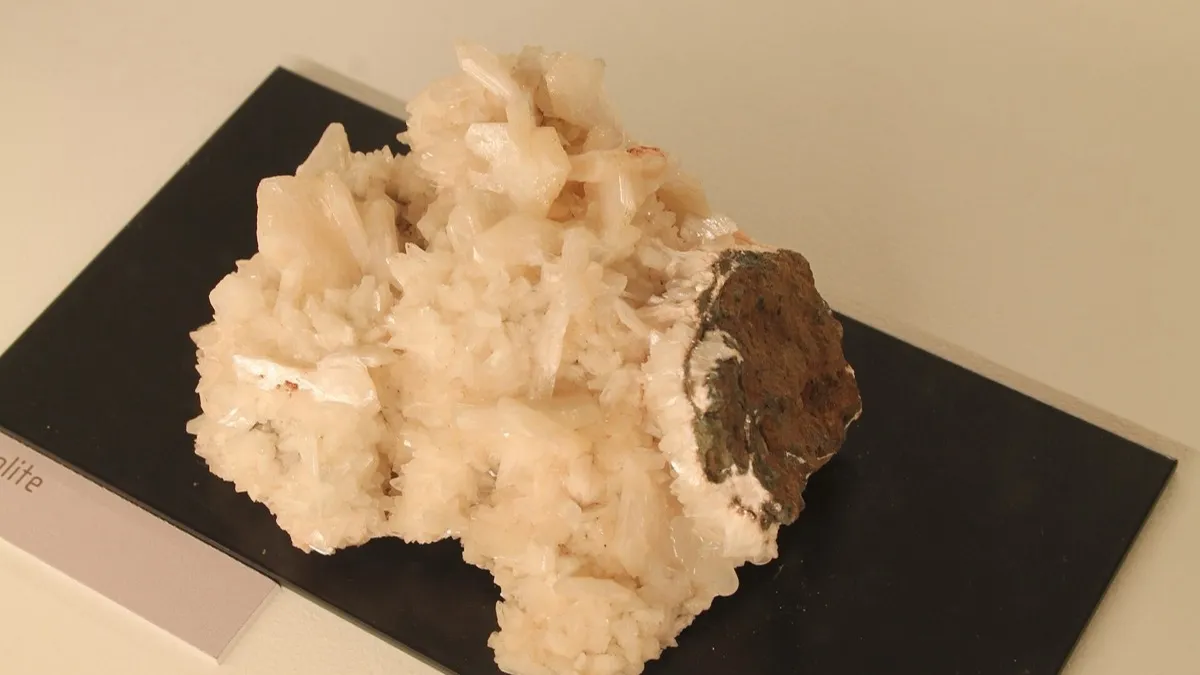
- They applied it to the synthesis of zeolites, a family of porous materials used as catalysts and filters in industry.
Why it matters
- Millions of synthesis procedures have been published, but each paper describes them in its own way. That makes it hard to compare recipes and find patterns that recur in successful experiments.
- According to the paper, the method outperforms existing open-source tools on zeolites and works with open LLMs that run on a local computer, without sending data to an outside service.
- It also matches specialised models in the fields those models were trained for, suggesting that the generalisation of current LLMs is good enough for this kind of task.
The number
0 labelled examples. The workflow does not need a hand-annotated training set, usually the costliest part of such projects.
Context
Digitising laboratory procedures is a step towards automating chemistry. If steps are stored in a standard format, they can be analysed in bulk, compared and eventually run on robotic equipment.
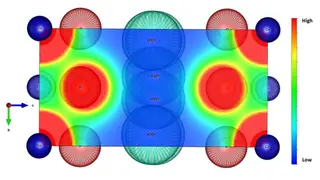
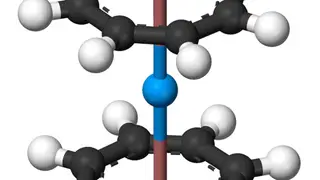
The use of AI models in chemistry and materials is advancing on several fronts. Mamífero reported how Fudan sped up the prediction of material charge density more than tenfold and how Pinal designs proteins from a sentence. OpenAI, for its part, declared its automated research intern goal met. In traditional chemistry, the work remains in human hands, as when Manchester chemists isolated uranocenium.
What’s next
- The authors released the algorithms openly so other chemists can evaluate action sets, compare LLMs and digitise their procedures.
- The natural next step is to apply it to other material families and measure how many extraction errors remain without human review.
- For laboratories on tight budgets, being able to use local models cuts costs and avoids sharing research data with third parties.
Bottom line
The work does not invent a zeolite. It organises what is already known so it can be read at scale. If extraction proves reliable, decades of recipes scattered across papers become a database that can be queried.
Sources
- Costa, D. P., Manica, M., Laino, T. et al., “A training-free, domain-extensible LLM-based approach for automated extraction of standardized preparation procedures”, Nature Communications, 29 October 2026, DOI 10.1038/s41467-026-78605-7
- Cover image: Koreller, CC BY-SA 4.0, via Wikimedia Commons
Edited by Rodrigo Cornejo. How we select and verify: who writes these notes.