What happened
- 6K, a startup from North Andover, Massachusetts, announced on Thursday 5 November 2026 that it won conditional approval for a US$ 250 million loan from the Department of Defense to build a factory in Tennessee. TechCrunch reported it on 6 November.
- The plant will make battery materials with a proprietary microwave-based process, without relying on Chinese suppliers.
- The company had received a US$ 50 million grant from the Department of Energy in 2023, which the Trump administration canceled in a sweep of awards from the previous administration. 6K had to reapply.
- The factory was meant to open in 2024, but the cancelled funding and uncertainty in the electric vehicle market forced the company to rework its plans.
Why it matters
- Batteries are everywhere, even on the battlefield, which explains the Pentagon’s interest in expanding domestic manufacturing capacity.
- The company says its process makes battery materials without relying on Chinese suppliers, a criterion that weighs in defense procurement.
- The case shows how the source of financing changed: from a cancelled climate subsidy to a defense loan.
The number
US$ 250 million. That is the amount of the conditionally approved loan, for a factory in Tennessee. The approval is conditional: it is not yet a signed credit.
Context
6K’s process uses microwaves to heat metals into plasma and then deposit them onto a surface. This reduces the number of steps needed to make cathode material, a key battery component.
The company says the method works for several battery types, among them lithium iron phosphate, known as LFP. TechCrunch gives no cost or performance comparisons against traditional processes, so the method’s advantages are, for now, claims by the company.
TechCrunch also points to other recent stories on the same turn: other US battery startups that found a lifeline in defense, among them Sila, which received a US$ 1.4 billion Pentagon loan according to the outlet’s own headlines.
At Mamífero we follow battery research and industry. We reported that a lithium-rich cathode with tungsten delivered 543 Wh/kg in a solid-state battery and that a recyclable sulphur flow battery kept 98.1% of its capacity. Also that Singapore turns cadmium waste into anodes and that the electrolyte decides how long a lithium battery lasts.
What’s next
- The loan still has to go from conditional to final.
- The Tennessee factory will have to show that the microwave process works at industrial scale.
- The company will need to secure buyers for its materials, something TechCrunch does not detail.
Bottom line
A plant conceived for the electric vehicle market now seeks defense financing. What changed is not the technology, but who pays for it.
Sources
- TechCrunch, “Pentagon offers battery startup 6K $250M loan to build US factory”, 6 November 2026, link.
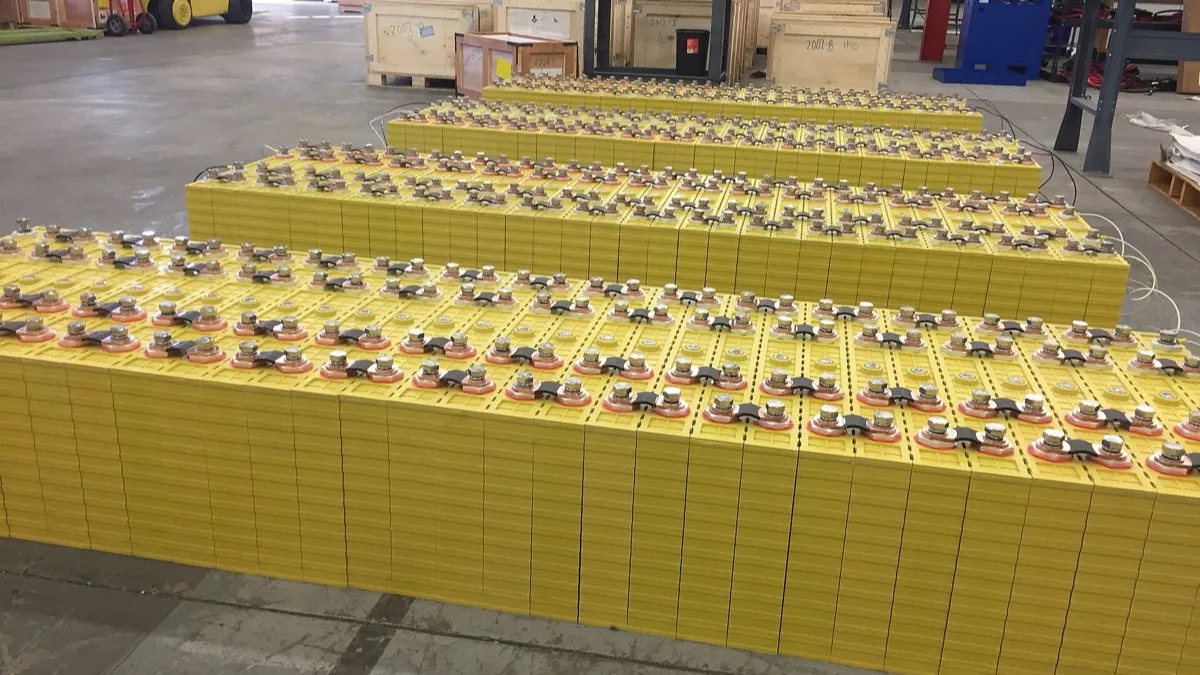
- Cover image: Yo-Co-Man, CC BY-SA 4.0, via Wikimedia Commons
Edited by Rodrigo Cornejo. How we select and verify: who writes these notes.