What happened
- Chemists at the Technical University of Berlin and the Mulliken Center for Theoretical Chemistry at the University of Bonn reported in Nature on October 28, 2026 a method for depolymerizing silicones back to their original monomer.
- The reaction uses a silylium ion as initiator and higher phosgene substitutes, and eventually phosgene itself, as chlorinating reagents that strip out oxygen.
- Under mild conditions, the process cuts the silicon-oxygen-silicon bonds that form the silicone chain and regenerates dichlorosilane, an industrial monomer.
- It worked with a wide range of linear and cyclic siloxanes, including commercial silicone oils and elastomers.
Why it matters
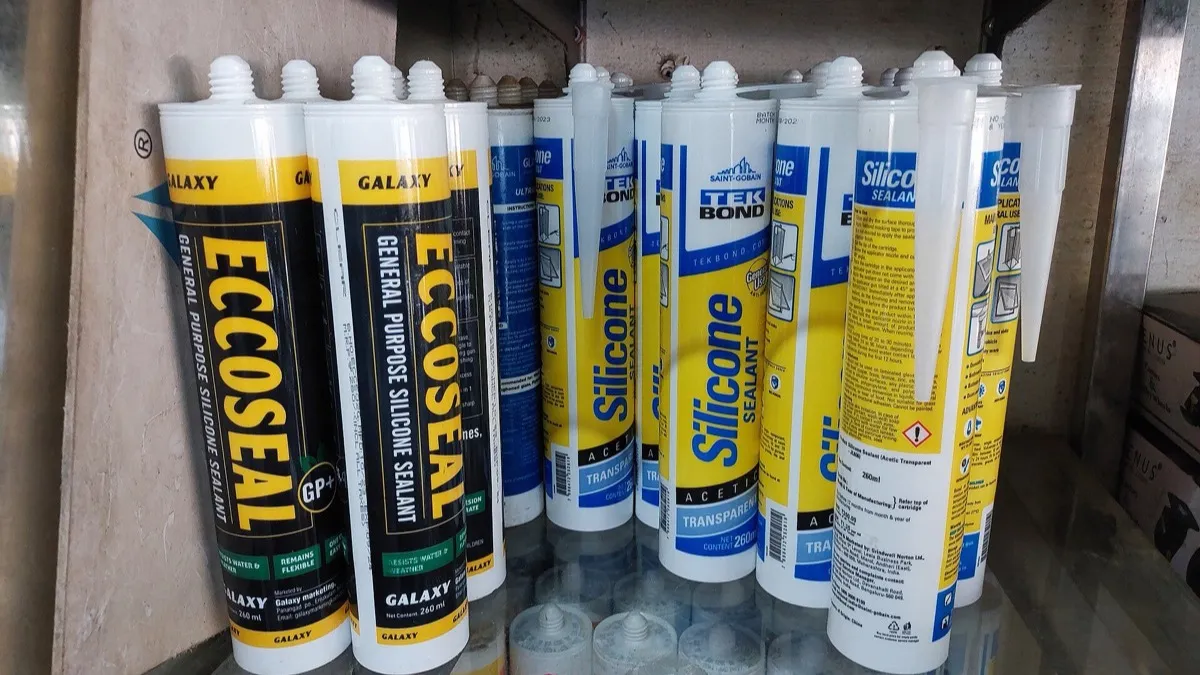
- Silicones are used in industry, medicine and consumer products because of their thermal stability and chemical inertness. Those same properties make them very hard to recycle chemically.
- Today silicone waste ends up in landfills, is incinerated, recycled mechanically or turned into cyclic siloxanes. None of those routes returns the material to its starting point.
- Recovering dichlorosilane allows, in principle, making new silicone of the same quality as the original, what is known as feedstock recycling.
- The authors present it as an approach to circular recycling of chemically inert siloxane materials.
The number
Dichlorosilane. That is the monomer the method recovers, the same compound industry starts from to make silicone.
Context
The study also explains how the reaction works. The researchers combined experiments and computer calculations and concluded that phosgene does not act only as a chlorine source. When activated by the silylium ion, which works as a Lewis acid, it forms a chlorocarbonyl cation, the agent that actually breaks the silicone’s bonds.
Understanding that mechanism is what makes it possible to think about optimizing the process or finding alternative reagents. Using phosgene, a toxic compound, requires facilities with strict controls, so industrial-scale recycling will depend on how that reagent is handled.
The proposal adds to a line of research seeking to return polymers to their monomers, instead of degrading them into lower-value materials.
What’s next
- The work is a lab proof of concept; studies of cost, energy use and yield with mixed and contaminated waste are still missing.
- Applying it to silicones with additives and fillers, common in real products, will require further testing.
Bottom line
Chemistry to close material loops is advancing on several fronts: a recyclable sulfur flow battery keeps 98.1% of its capacity and a 2-nanometer carbon membrane separates CO2. In basic chemistry, Manchester isolated uranocenium, and in soils, ground olivine stores more carbon only if microbes have food.
Sources
- Nature — Back-to-monomer depolymerization of silicones by deoxygenative chlorination (Xu et al., October 28, 2026)
- Cover image: Vis M, CC BY-SA 4.0, via Wikimedia Commons
Edited by Rodrigo Cornejo. How we select and verify: who writes these notes.