What happened
- On October 20, 2026, Nature Climate Change published a study on the South Indian convergence zone, one of the sources of rainfall in southern Africa. On October 23, the journal published a summary of the work.
- Extreme southward shifts of that zone can cause severe floods in parts of the region.
- The team, from the Ocean University of China, Laoshan Laboratory, Xiamen University and the Chinese Academy of Sciences, analysed climate model projections.
- Under a high-emissions scenario, those extreme shifts go from one every 22 years in the twentieth century to one every 10 years in the twenty-first, with an average 20% increase in rainfall intensity.
Why it matters
- Knowing how often these events will come helps plan flood defences and warnings in the region.
- The study identifies the mechanisms: the African continent warms faster than the Indian Ocean, which strengthens northerly winds.
- In addition, Southern Ocean westerlies migrate poleward, warm the southern subtropical Indian Ocean faster and boost moisture transport from the Atlantic towards Africa.
The number
From 1 every 22 years to 1 every 10. Frequency of extreme shifts of the South Indian convergence zone in the twentieth and twenty-first centuries, under high emissions.
Context
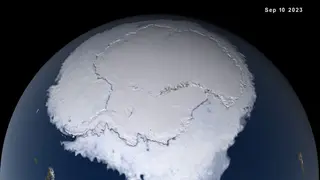
The results come from model projections under a high-emissions scenario, not from observations, and the figure depends on that assumption. The authors conclude that more frequent southward migration of the zone could signal a rising flood risk in parts of southern Africa. The ability to anticipate events weeks ahead improved with methods such as the probabilistic correction of the ECMWF model, and the Southern Ocean also appears in the winter maximum of Antarctic sea ice.
What’s next
- The authors suggest using the shift of this zone as an indicator of flood risk in the region.
- Figures for lower-emission scenarios remain a needed comparison for planning.
Bottom line
A shift in a rain band over the Indian Ocean can decide which parts of southern Africa flood. Other recent studies project climate from ice, such as Thwaites Glacier’s contribution to sea level and the Baffin ice cap that warmth held back.
Sources
- Nature Climate Change — Increased southward swings of the South Indian convergence zone under greenhouse warming (October 20, 2026)
- Nature Climate Change — Climate warming boosts frequency and intensity of southern Africa’s rainfall extremes (study summary, October 23, 2026)
- Cover image: krugergirl26 from Boston, MA, CC BY 2.0, via Wikimedia Commons
Edited by Rodrigo Cornejo. How we select and verify: who writes these notes.