What happened
- Toshiba Europe won a contract from Innovate UK, part of UK Research and Innovation (UKRI), to develop technologies that unlock the commercial potential of quantum networks.
- The project will build technology for long-distance quantum links and networks serving multiple users, and validate it under realistic operating conditions.
- The contract came through the Enabling Commercial Quantum Networking competition, a combined £20 million investment in the UK quantum ecosystem.
- The competition supports UK businesses developing components and sub-systems for quantum networks.
- The information is a press release reproduced on 6 November 2026 by The Quantum Insider.
Why it matters
A quantum network carries information in quantum states, and its main appeal is security: an eavesdropping attempt disturbs the signal and is detected. The problem is distance, because the signal weakens in fiber and cannot be amplified like a normal one. Government funding of components and real-world validation signals that the bottleneck is now engineering, not only physics.
The number
£20 million. The combined investment of the competition; Toshiba’s individual contract value is not reported.
Context
The project fits the UK National Quantum Strategy, which includes a mission to deploy advanced quantum networks at scale by 2035 and lay the foundations of a future quantum internet. Such infrastructure could share quantum information among computers and other quantum systems in different places. Related coverage: Florida switches on the first stretch of its quantum-safe network between two colleges using IonQ technology, IBM, Oak Ridge and AMD join quantum and classical computing to correct errors, A study gathers 24 problems where a quantum computer could outdo a classical one, A quantum gas below 10 picokelvin aboard the Chinese space station.
Quantum key distribution, a mature application of these networks, uses photons to agree encryption keys between two points. Its practical limit is fiber distance, which is why repeaters and satellite links are researched. A multi-user network adds another difficulty: splitting the signal without losing its quantum properties. Validating all this under real conditions means testing with noise, changing temperature and outages, where laboratory prototypes tend to fail.
What’s next
- Toshiba must detail timelines and test routes for the long-distance links.
- Other contracts from the same competition may be announced in coming days.
- Real-world validation will show whether components move from test bench to operational networks.
Bottom line
Quantum communication is no longer discussed as a curiosity but as a public contract with deadlines and components. The challenge is making it work across many users and long distances.
Sources
- The Quantum Insider, “Toshiba Secures UK Contract to Develop Quantum Networking Technologies”, 6 November 2026. The outlet reproduces Toshiba Europe’s press release; the company’s page was not read.
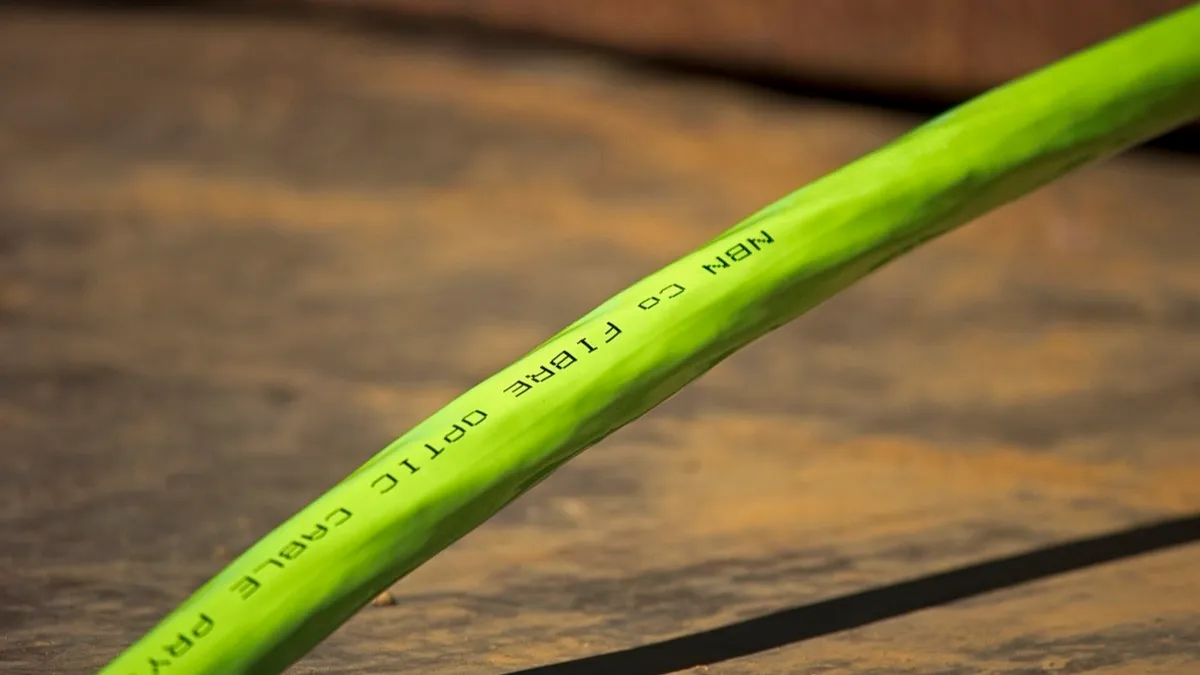
- Cover image: Bidgee, CC BY-SA 3.0 au, via Wikimedia Commons
Edited by Rodrigo Cornejo. How we select and verify: who writes these notes.