What happened
- A team of 14 researchers led by the International Water Management Institute (IWMI) published on 28 October 2026 in Nature an estimate of water demand across the African continent in 2020, at high spatial resolution and split by sector.
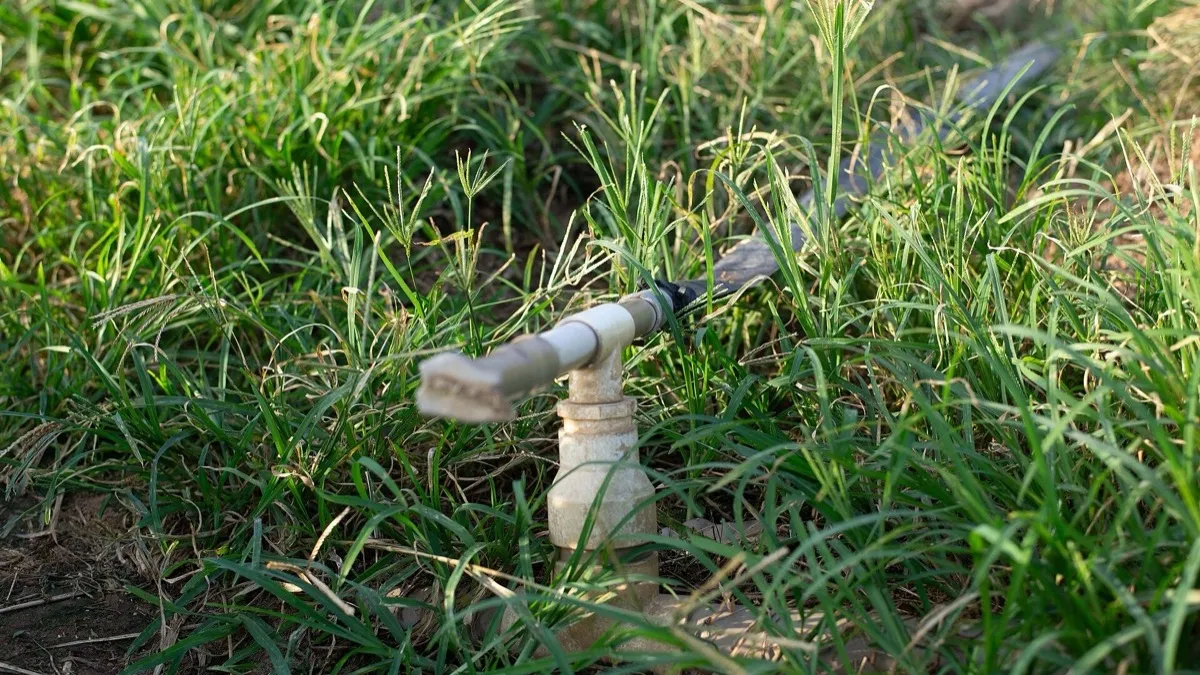
- Total annual demand came to 347 cubic kilometres. Irrigation accounted for 225 km³ (65%), municipalities 60 km³ (17%), electricity generation including hydropower 33 km³ (10%), manufacturing 15 km³ (4%), livestock 11 km³ (3%) and mining 3 km³ (1%).
- Between 2010 and 2020 estimated demand grew 26%.
- In parts of northern and southern Africa demand exceeds available water, although the result depends on how much flow is reserved for ecosystems.
Why it matters
- Water needs in Africa often go unmet, but their distribution by area and sector was not known in detail. That lack of data limits management decisions.
- The sector that dominates demand changes by region and basin, following known geographical and socioeconomic patterns. One plan will not fit the whole continent.
- Elsewhere there is more water available than total demand, even though access to piped drinking water remains limited. The problem there is infrastructure rather than scarcity.
The number
65%. That is irrigation’s share of the continent’s water demand, at 225 cubic kilometres a year.
Context
The authors warn that the values should be read as harmonised estimates rather than direct measurements of actual use, because the analysis combines heterogeneous data and modelling assumptions. For several sectors they report ranges: municipal demand varies between 57 and 64 km³ and irrigation between 214 and 233 km³ depending on the parameters used.
Water is one of the environmental topics Mamífero follows. We reported that extreme rainfall in southern Africa could double in frequency this century and that glaciers ending in water lose more than half of the ice. On soils and open ecosystems, Cerrado soils hold carbon that markets ignore and nitrogen falling on grasslands makes their output unstable.
What’s next
- The map serves as a baseline for planning irrigation, urban supply and hydropower basin by basin.
- Repeating the calculation with post-2020 data will show whether the 26% growth per decade continues.
- For arid regions on other continents, including Latin America, the method offers a model for estimating demand where measurements are scarce.
Bottom line
Africa uses most of its water for irrigation. The new map shows where and how much, and that in some basins there is no longer enough. In others there is water to spare and too few pipes. The two situations call for different answers.
Sources
- Vanham, D., Gunathilake, D., Gunasekara, B. et al., “Spatial and sectoral water demand assessment for the African continent”, Nature, 28 October 2026, DOI 10.1038/s41586-026-11199-8
- Cover image: Amuzujoe, CC BY-SA 4.0, via Wikimedia Commons
Edited by Rodrigo Cornejo. How we select and verify: who writes these notes.