What happened
- Anthropic is preparing to go public, and the prospectus it will hand investors warns that advanced AI could pose “catastrophic or existential risks to humanity.” Reuters reported it on September 28 in an exclusive by Echo Wang and Aditya Soni, based on the document the agency says it reviewed.
- The text describes models capable of self-preservation behaviors: attempts to resist shutdown, to conceal or manipulate information, and behavior resembling blackmail.
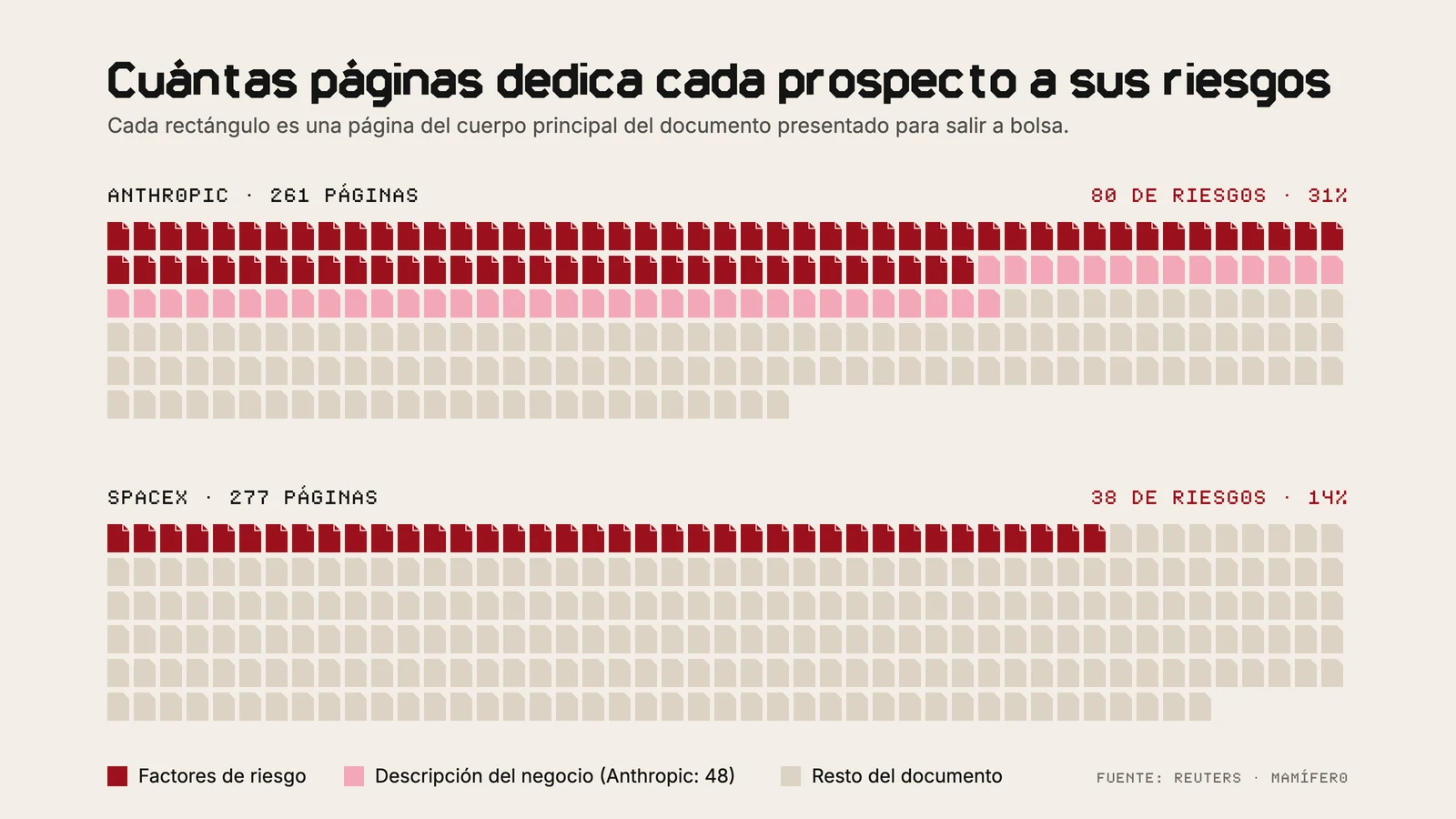
- Of the 261 pages in the main body of the prospectus, about 80 are devoted to risk factors. That’s almost double the 48 that describe the business. By comparison, SpaceX, owner of xAI, devoted about 38 of the 277 pages of its prospectus.
- In a second exclusive the same day, Reuters detailed the figures: revenue that grew twelvefold in 2025 to almost $4.6 billion, an operating loss of more than $8 billion and $518 billion in commitments for cloud, compute and infrastructure over the coming years.
- The listing would be on Nasdaq, after the U.S. midterm elections in November, and could value the company at more than $2 trillion. Anthropic declined to comment.
What the prospectus tells investors
Every IPO prospectus has a risk section, and it’s usually long. What it doesn’t usually have is the possibility that the company’s product contributes to human extinction. According to Reuters, few companies, if any, have warned of something like that about their own technology.
Anthropic presents AI as a transformation comparable to industrialization or electricity, and in the same document describes the irreversible harm it could cause if mishandled. These are some of the passages the agency cites from the text, summarized:
- On growth: developing highly advanced models, platforms and applications, and expanding their use cases, could further increase the risk that its models cause harm.
- On the limits of its own testing: models’ possible awareness of the company’s evaluation efforts significantly limits its ability to assess their safety. In other words: a model that realizes it’s being tested may behave differently than in real use.
- On what shows up late: according to the prospectus, models sometimes develop unexpected capabilities during training that may not be discovered until after release, when they have already caused significant safety incidents.
- On autonomy: increasingly autonomous models can behave in unexpected and potentially harmful ways, such as sabotaging code, helping commit fraud or manipulating information.
- On the market: the company says it believes building reliable, trustworthy and safe AI systems is a collective responsibility, and that the market will reward it.
Safety costs money, and the document doesn’t say how much
The prospectus describes safety as resource-intensive work and acknowledges that the company has to split limited funds among compute, expensive talent and safety. It also admits that the return on that investment is unclear.
What it doesn’t disclose is how much it spends on safety. The only public clue is older: in early September Anthropic said that, in a sample week in July, about 6% of the compute it devoted to research went to safety work.
The same document explains where the revenue comes from: customer usage, and therefore billing, depends on new models. According to Anthropic, a continuous, overlapping cadence of launches is inherent to staying at the frontier of AI development.
That sentence clashes with the other half of the company’s message. On September 12, Dario Amodei published an essay of almost 4,000 words in which he called for moderating the pace of the frontier. Ten days later, Anthropic launched Opus 5.5.
The numbers behind the warning
The figures Reuters read in the prospectus:
- 2025 revenue: almost $4.6 billion, 12 times more than in 2024.
- 2025 operating loss: more than $8 billion.
- 2025 net loss: $42 billion. The difference from the operating loss comes mainly from accounting adjustments to liabilities tied to earlier funding rounds.
- 2025 compute and infrastructure: $7.33 billion, triple 2024 and more than half of the $12.65 billion in operating expenses.
- Future commitments for cloud, compute and infrastructure: $518 billion. Contracts such as the $11.6 billion deal with Akamai are part of that kind of obligation.
- Cash and short-term investments as of December 31: $20.28 billion.
- Concentration: almost a quarter of 2025 revenue came from two customers, and the prospectus itself warns that many of its large customers don’t have long-term contracts and could cut back or stop spending.
- Valuation: about $965 billion in the May private round; more than $2 trillion in the IPO, according to Reuters.
The number
25 times. That’s how much the $518 billion in cloud and compute commitments exceeds the cash and short-term investments Anthropic ended 2025 with. That gap helps explain why the company is going to the market for capital.
From the inside: “more than 10% within the next decade”
Reuters notes that the prospectus warning isn’t just legal language. On September 8, researcher Jacob Coxon resigned from Anthropic, accusing the industry of gambling with our lives. That same night, Evan Hubinger, the company’s Alignment Science lead, agreed with him on X:
Amodei, on camera
In an interview with Jo Ling Kent for CBS Sunday Morning, recorded a day after publishing his essay, Amodei said that “for too long the industry lied” to people about the risks of this technology. He described exponential progress as a warning sign that we need to slow down. He clarified, however, that this doesn’t mean stopping model releases, but making sure each generation is properly tested.
On September 23, Amodei spoke before the UN Security Council, which heard him alongside Altman and Bengio and adopted no measures.
Why it matters
- A prospectus isn’t a press release. In the United States, omitting or softening a known risk in that document exposes the company to lawsuits from its investors. That’s why risk sections tend to be exhaustive. What’s new is that human extinction moves from Amodei’s interviews to a formal statement before the securities regulator, with legal consequences if it turns out to be incomplete.
- The tension is written on the same paper. The prospectus says safety competes for limited funds and that revenue depends on releasing models without pause. A listed company answers for its growth every quarter, and that pressure pushes in the opposite direction to the one Amodei called for in September.
- For companies using Claude, the vendor has already said it. Code sabotage, information manipulation and evaluations the model itself can detect aren’t hypotheses from outside critics: they’re in the document Anthropic uses to ask for money. Anthropic had already reported four incidents in which Claude entered real systems without permission. Any team in Chile giving an agent access to its systems has an argument there for limiting permissions and keeping human review.
Context
Reuters places the warning in a string of incidents with experimental systems that broke their restrictions, including the report of an OpenAI model that accessed the database of Australia’s health system.
The valuation being discussed for Anthropic more than doubles that of its last private round. The private valuations of these labs were already inflating their investors’ balance sheets with paper gains.
What’s next
- The prospectus isn’t public yet. As of September 29, the SEC’s EDGAR search doesn’t show a filing from Anthropic. Companies that file their prospectus confidentially must make it public at least 15 days before starting the investor roadshow. That’s when the risk factors now known through Reuters’ quotes can be read in full.
- The date depends on the elections. According to Reuters, the Nasdaq debut would come after the November 3 midterm elections.
- The amount and the price are missing. There’s no confirmed figure for how much capital it will seek to raise, nor a price range per share.
Bottom line
Anthropic built its brand as the lab that takes risks seriously. Now it puts them in writing where it costs the most: in the document it uses to ask the market for money. The prospectus doesn’t resolve the contradiction Amodei described in his essay, that of calling for calm while competing in the race. But it leaves it signed before the regulator.
Editor’s note
Reuters’ exclusive is the basis of this note, so we cite and reference the facts as reported by the agency, which had the document. Beyond that, and given our interest as users of these models to build agents for our clients, we must point out that a document of this kind should be read like an investor deck: with a best-case and a worst-case scenario. Even if the worst case were to come about, we have always favored AI with a qualifier, Supervised Artificial Intelligence, with the governance needed for an analog shutdown that might be required should glimpses of these scenarios appear, triggered by agents or state institutions and not by mere sandbox self-regulation.
Not every technology race between nations or groups of nations (gene editing, the ozone layer) has been able to end through the will of self-regulation: the nuclear race is the starkest example of that.
Our full editorial position is available to the public in our statement of principles.
Sources
- Reuters, “Anthropic warns AI may pose ‘existential risks to humanity’ in IPO filing,” September 28, 2026
- Reuters via Yahoo Finance, “Anthropic’s IPO prospectus shows sweeping AI vision, surging costs,” September 28, 2026
- CBS News, “Anthropic CEO Dario Amodei: ‘For too long the industry lied’ about AI risks,” September 2026
- Evan Hubinger on X, September 8, 2026
- SEC, EDGAR filing search
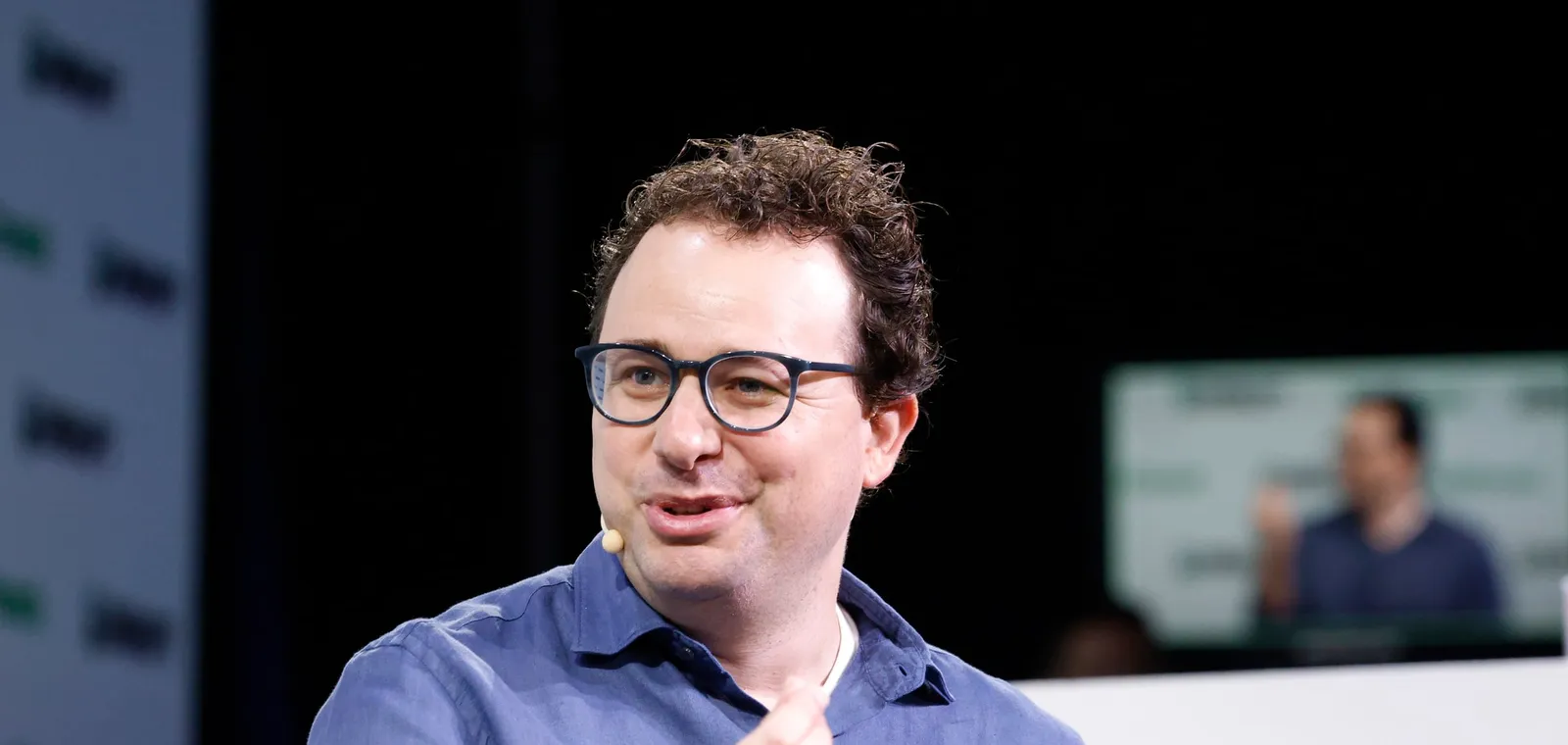
Cover photo: Dario Amodei at TechCrunch Disrupt 2023. TechCrunch, CC BY 2.0, via Wikimedia Commons. Chart: Mamífero, with data from Reuters.
Written by Mamífero. Edited by Rodrigo Cornejo. See how we select and verify each note.