What happened
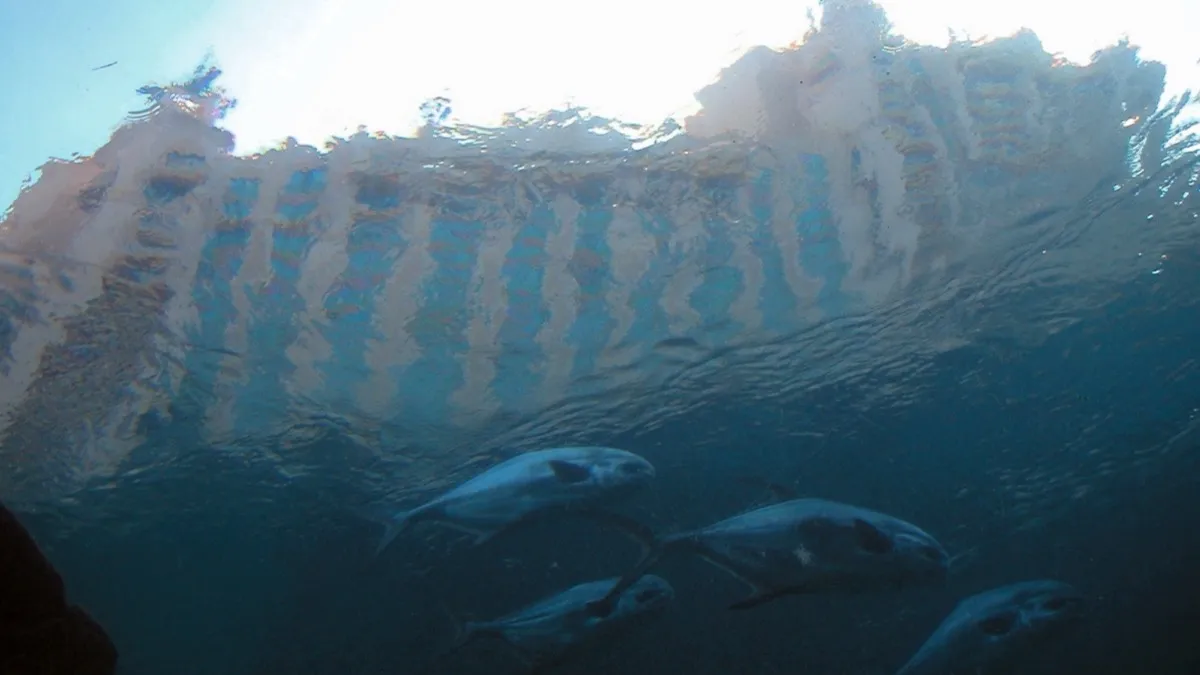
- Nine researchers, with Love, Nayak, Grassick and Kong among the authors, published on 6 November 2026 in PNAS a study on the evolution of collective behaviour in ray-finned fishes.
- It is usually thought that evolution and lineage diversification depend on selection acting on individuals’ traits. But some behaviours only appear when individuals interact, such as collective movement.
- The authors used machine learning methods for text and image analysis to quantify collective movement for 2,839 species, nearly 10% of all living ones.
- Ray-finned fishes are the vertebrate class with the most species, and many of them show striking ways of moving as a group.
Why it matters
- It was not known whether collective behaviour evolves like individual traits or whether it influenced how groups diversified.
- The work connects a group behaviour with ecology and with rates of species formation.
- The analysis covers a very large part of the fish tree, which gives strength to the comparison.
The number
More than 300 transitions. That is the number of evolutionary changes the analysis detects in collective movement. In some lineages the trait is highly stable, and in others it is extremely labile.
Context
According to the authors, and consistent with theoretical predictions, collective movement is associated with more patchy diets and with higher predation pressure. That is, it tends to appear where food comes in patches and where there are more predators.
In addition, the evolution of collective movement coincides with an increase in the net macroevolutionary diversification rate. The abstract presents this as an association and not as a demonstration of cause, and does not detail which lineages explain the effect most strongly.
A methodological nuance: the tool uses machine learning to extract phenotypes from text and images, so the measure of collective movement is an estimate and not a direct observation in each species. The central subject of the work is evolution, not AI.
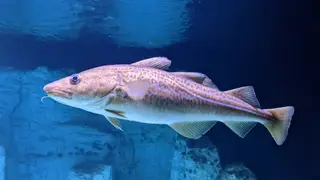
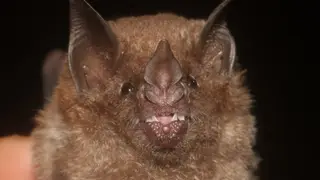
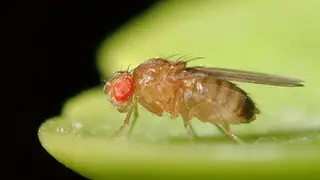
At Mamífero we follow evolutionary and marine biology. We reported that codfishes lost an essential gene and recycled another to hydrate their eggs and that 95 Neotropical bat lineages may be species still undescribed. Also that three neurons suffice for the rhythm of a fly’s walk and that marine reserves in Clarion-Clipperton barely exchange larvae.
What’s next
- Targeted studies could check whether collective movement causes diversification or accompanies it.
- Measuring the behaviour directly in selected species would validate the text- and image-based estimates.
- The approach can be applied to other groups that move together, such as birds or insects.
Bottom line
Swimming in a group seems to appear and disappear easily across the fish tree. Where it appears, there tend to be more species around it.
Sources
- Love, Nayak, Grassick, Kong et al., “Evolutionary dynamics of collective behavior across the tree of ray-finned fishes”, PNAS, 6 November 2026, DOI 10.1073/pnas.2611720123. This note is based on the paper’s abstract.
- Cover image: Fred Hsu (Wikipedia:User:Fredhsu on en.wikipedia), CC BY-SA 3.0, via Wikimedia Commons
Edited by Rodrigo Cornejo. How we select and verify: who writes these notes.