What happened
- Five researchers, with Prat-Carrabin, de Hollander, Bedi and Gershman among the authors, published on 5 November 2026 in Nature Communications a study on how the human brain adapts its representation of numbers to context.
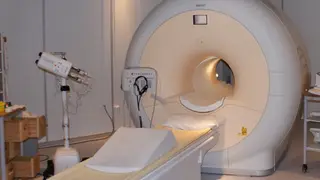
- They used functional magnetic resonance imaging while people estimated quantities in tasks with variable number ranges.
- Number representations in human parietal cortex recalibrate dynamically to context, which enables context-sensitive behavioural accuracy.
- The tuning properties of neural populations shift and rescale collectively with the range.
Why it matters
- The brain encodes information in the joint activity of populations of neurons. To behave well, that code must readjust when the statistics of what is seen change.
- It was not known how that adaptation occurs. This work observes it in an abstract magnitude, numbers, and not only in simple sensory stimuli.
- The authors propose that flexible population tuning could be a canonical mechanism of encoding networks.
The number
Precision proportional to range. Neural precision increases with the range of numbers and predicts corresponding changes in behavioural precision. People with stronger neural adaptation show larger behavioural adjustments.
Context
The result extends to abstract representations the idea of efficient coding, which until now had been studied mostly on fixed sensory stimuli. According to that idea, the brain’s resources are allocated according to what is most likely to be encountered: if the numbers in play are few and close, the code is sharpened there.
The adaptation is distributed: it does not depend on a small group of neurons, but on a coordinated change across the whole population. This achieves efficiency in real time, not only after long periods of learning.
Functional MRI measures average activity of large groups of neurons, not individual neurons, and the abstract does not report how many people took part. The conclusion on population tuning should therefore be read as an inference from aggregate signals.
At Mamífero we follow the neuroscience of perception and cognition. We reported that the brain removes neurons with highly altered genomes around birth and that gold nanoparticles and a genetic receptor activate chosen neurons with infrared light. Also that having more cells with two X chromosomes eases Turner syndrome in the brain and that lead harms long-term memory by disrupting mitochondrial redox balance.
What’s next
- The authors suggest this kind of adjustment could be a common mechanism in other encoding networks.
- Testing the mechanism with other magnitudes, such as time or size, would show its reach.
- Which specific circuits produce the readjustment remains to be learned.
Bottom line
The brain has no fixed ruler for numbers: it stretches or shrinks it according to the range. Those who do it best, stretch best.
Sources
- Prat-Carrabin, de Hollander, Bedi, Gershman et al., “Distributed range adaptation in human parietal encoding of numbers”, Nature Communications, 5 November 2026, DOI 10.1038/s41467-026-78851-9. This note is based on the paper’s abstract.
- Cover image: Mj-bird, CC BY-SA 3.0, via Wikimedia Commons
Edited by Rodrigo Cornejo. How we select and verify: who writes these notes.