What happened
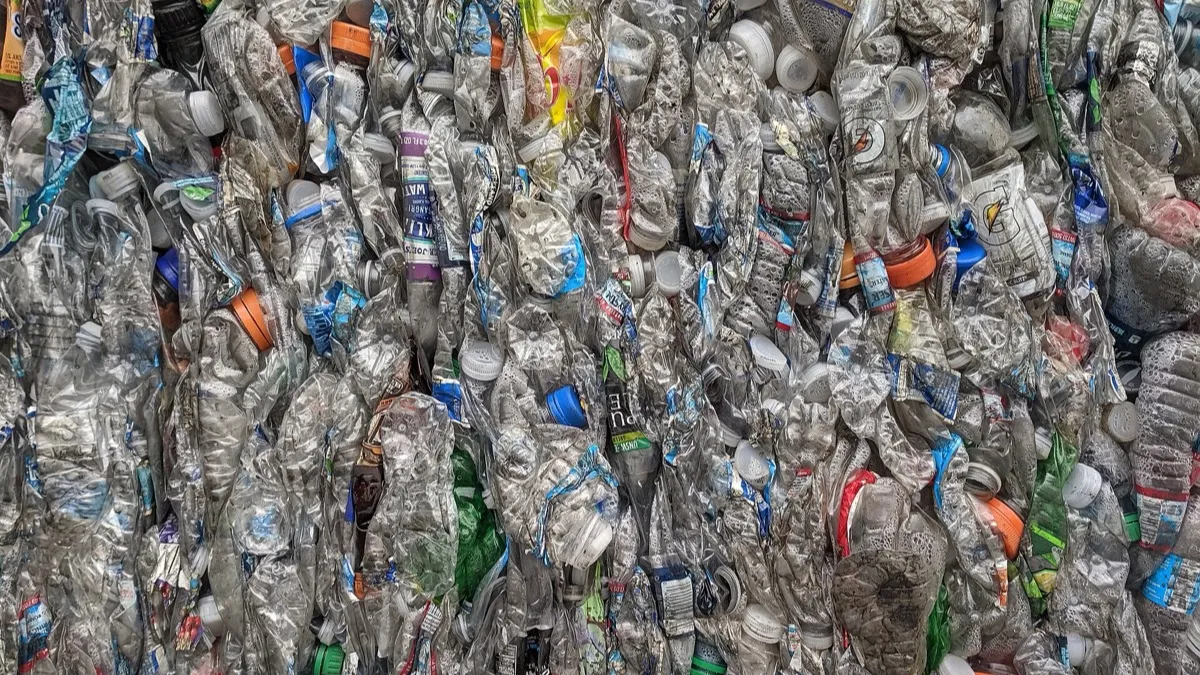
- A team of 22 researchers published on 3 November 2026 in Nature Communications a method for designing enzymes that break down poly(ethylene terephthalate), the PET plastic used in bottles.
- The method combines evolution-informed design, called EVdesign, with rational design. The first draws on the evolutionary relationships among related enzymes to introduce many amino acid changes at once.
- The authors tested 603 designs in the laboratory, derived from eight parent PETase enzymes.
- More than 400 variants, carrying between 12 and 68 amino acid substitutions, were able to depolymerise PET. Nearly all outperformed the enzyme they started from.
Why it matters
- Enzymes that break PET allow the plastic to be recycled into its basic building blocks rather than just melted. Improving their activity and stability is a condition for using them at scale.
- Many of the new variants came close, in partial conversion assays, to the performance of LCC-ICCG, an enzyme the authors use as a benchmark.
- The work shows that useful diversity can be generated from several different enzymes, not just one.
The number
603. That is the number of designs the team tested in the laboratory, from eight PETases. More than 400 worked.
Context
Results varied widely depending on the starting enzyme. The cutinase TfCut2, from the bacterium Thermobifida fusca, proved the easiest base to redesign. But it had a thermal stability limit, which the team solved with four rational mutations. That variant became the base for iterative rounds of EVdesign that further improved its activity.
The authors also saw a trade-off: the further sequences move from the original, the fewer enzymes are active, but the spread in their performance widens. That spread makes it possible to find cases far above average. They conclude that EVdesign is a robust strategy for generating diverse, highly active enzymes.
At Mamífero we follow protein design and recycling chemistry. We reported that Pinal designs proteins from a sentence and two of its enzymes worked and that a recyclable sulphur flow battery kept 98.1% of its capacity. On pollution, more algae in the Arctic will drag more persistent pollutants to the seabed, and on capture, a 2-nanometre carbon membrane separates CO₂.
What’s next
- The method can be applied to other enzyme families with many known evolutionary relatives.
- The variants with the highest activity will need testing under full conversion conditions and at larger scale.
- Comparison with LCC-ICCG in full assays will show whether any can replace current benchmark enzymes.
Bottom line
Instead of improving one enzyme step by step, the team let the evolutionary history of several PETases suggest hundreds of changes at once. Two out of three designs broke down PET, and nearly all did so better than their starting point.
Sources
- Norton-Baker, B., Fram, B., Thadani, N. et al., “Iterative computational and rational design generates diverse PET hydrolases for plastic depolymerization”, Nature Communications, 3 November 2026, DOI 10.1038/s41467-026-78471-3. This note is based on the paper’s abstract.
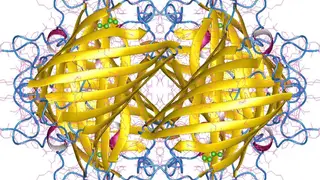
- Cover image: Grendelkhan, CC BY-SA 4.0, via Wikimedia Commons
Edited by Rodrigo Cornejo. How we select and verify: who writes these notes.