What happened
- A team of 19 researchers published on 3 November 2026 in PNAS a study that challenges how metal oxidation is described.
- The traditional view is a dichotomy: the oxide layer grows outward, because metal cations diffuse to the surface, or inward, because oxygen diffuses towards the metal. Which one dominates depends on defects in the oxide crystal.
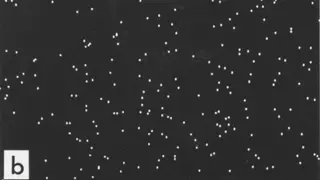
- Using environmental transmission electron microscopy, the authors filmed the oxidation of copper, a textbook case of outward growth.
- They saw oxide advancing at the same time at the surface, between oxygen and copper oxide, and at the buried interface, between the oxide and the copper.
Why it matters
- Oxidation sets the durability of metals in industry, electronics and energy. Predicting its rate depends on understanding where the oxide grows.
- The work shows that the two growth modes are not mutually exclusive: they are coupled within a single process.
- It identifies a concrete mediator, vacancy injection, that helps predict oxidation kinetics.
The number
2 fronts. That is what the team saw in copper oxidation: one oxide front at the surface and another at the buried interface with the metal, advancing at the same time.
Context
The simulations accompanying the study explain the origin. When copper cations move out to the surface to form oxide, they leave vacancies in the metal lattice below. That sustained flow of vacancies makes it easier for oxygen to enter and form oxide at the buried interface too.
So outward growth, driven by cations, directly enables inward growth, driven by anions. The authors present this as a unified framework and propose that vacancy injection explains mass transport at interfaces during solid-state transformations in reactive environments.
At Mamífero we follow materials science. We reported that PolyU unveiled an alloy that keeps strength and ductility at minus 196 degrees and that a one-metre titanium single crystal was 3D-printed. In chemistry, Manchester chemists isolated uranocenium, and in metal physics, Columbia trapped electron waves in a metal by interference.
What’s next
- The same analysis can be applied to other metals considered outward- or inward-growing.
- The role of vacancies can be built into models that predict corrosion and component lifetime.
- Controlling defects could help design more predictable coatings or oxidation processes.
Bottom line
Copper oxidises from above and below at the same time, and what links the two fronts are the gaps the metal itself leaves behind. A textbook idea is corrected by a film.
Sources
- Liang, Z., Sun, X., Wu, D. et al., “Coupled outward and inward oxide growth during metal oxidation”, PNAS, 3 November 2026, DOI 10.1073/pnas.2607434123. This note is based on the paper’s abstract.
- Cover image: Didier Descouens, CC BY-SA 3.0, via Wikimedia Commons
Edited by Rodrigo Cornejo. How we select and verify: who writes these notes.