What happened
- Seven authors, led by Aglas-Leitner and including Perkins-Kirkpatrick, Brunner and Undorf, published on 5 November 2026 in Nature Communications a comparison between the heatwaves that broke records in recent years and those that could occur during the 21st century.
- According to the paper’s abstract, several metrics agree: the events already observed fall short of possible future ones.
- For some of the heatwaves analyzed, that conclusion holds even under low- and medium-emissions scenarios.
- With high or very high emissions, many regions would see heatwaves generating several times more cumulative heat and stretching much further in time.
Why it matters
- Emergency plans are usually calibrated against the worst event lived through. The work suggests that yardstick is falling short.
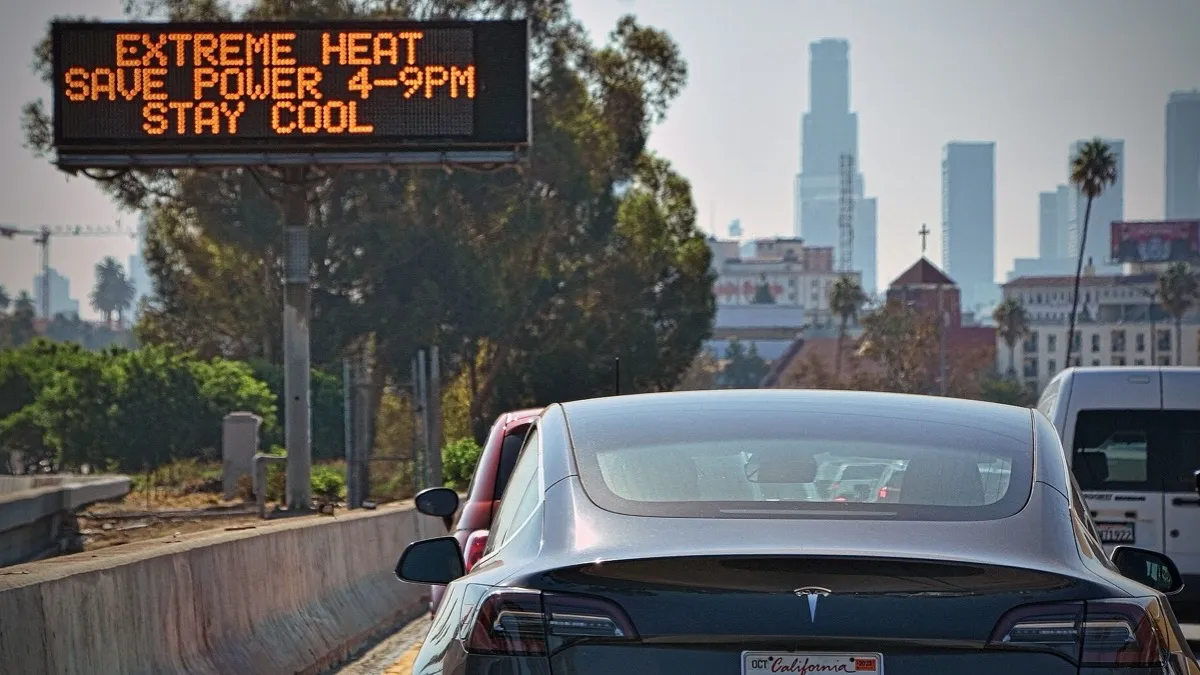
- A heatwave is not defined by its peak temperature alone. How much heat it accumulates and how many days it lasts determine the load on bodies, crops and power grids.
- The result links a political decision, the level of emissions, to something concrete: whether what is coming will resemble what each region already knows.
The number
Several months. That is the duration projected heatwaves could reach in a future of high or very high emissions, according to the study’s abstract, against current events measured in days or weeks.
Context
The authors describe a specific risk scenario: if the Nationally Determined Contributions under the Paris Agreement are not implemented, in most regions a concerningly large share of projected heatwaves would exceed all analyzed characteristics at once. They would not be merely hotter, or merely longer, but both and more.
The scope is worth stating. The work uses model projections under different scenarios, not forecasts of a specific event on a specific date, and the public abstract does not break results down by region. Its practical conclusion points two ways at once: cut emissions and prepare adaptation measures for conditions that, in many places, nobody has yet lived through.
At Mamífero we follow extreme climate closely. We reported that above 2 °C the Earth would keep warming even with zero emissions and that climate change amplified the floods of storm Boris. Also that extreme rainfall in southern Africa could double in frequency and that smoke from the Eaton fire carried 50 times more lead than a wildfire’s.
What’s next
- Governments can review whether their health, water and electricity systems are sized for events beyond the latest record.
- Regional studies will be needed to turn these projections into thresholds useful for cities and farming areas.
- How far the Paris commitments are met will define which scenario comes closest to what actually happens.
Bottom line
What counts today as an exceptional heatwave could become, across much of the planet, the new starting point. Preparing only to repeat the last record amounts to preparing for the past.
Sources
- Aglas-Leitner, Perkins-Kirkpatrick, Brunner, Undorf et al., “Recent extreme heatwaves are no match for future events”, Nature Communications, 5 November 2026, DOI 10.1038/s41467-026-76809-5. This note is based on the paper’s abstract.
- Cover image: Chris Yarzab, CC BY 2.0, via Wikimedia Commons
Edited by Rodrigo Cornejo. How we select and verify: who writes these notes.