What happened
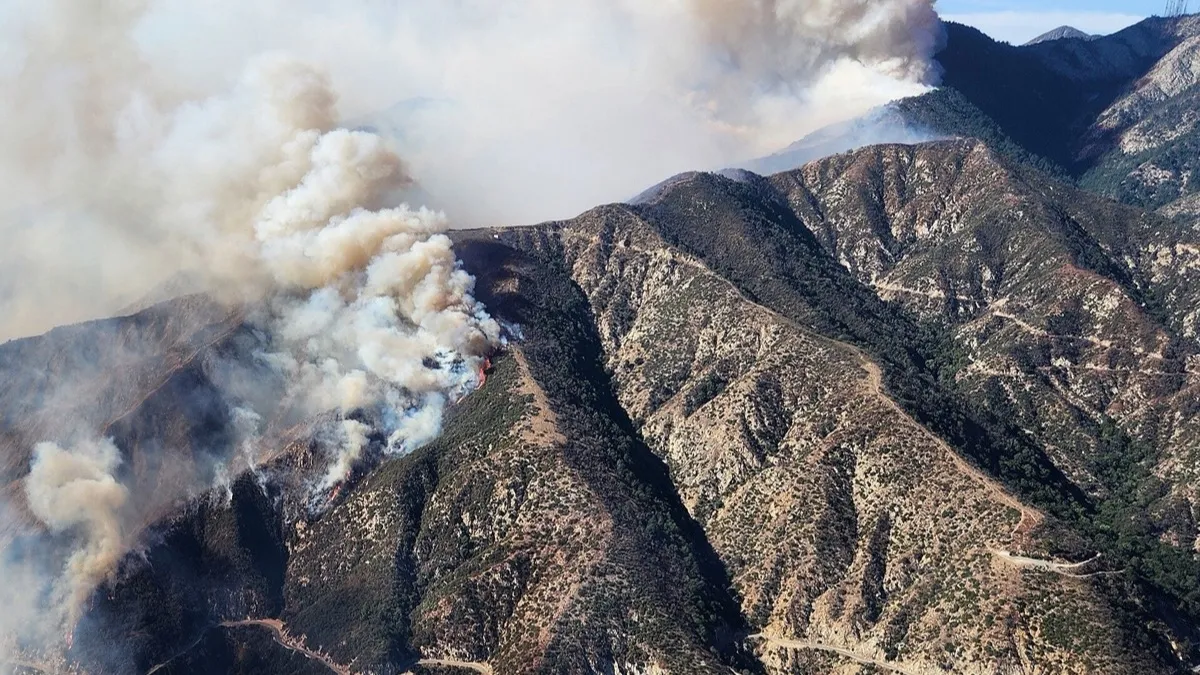
- Researchers from the California Institute of Technology (Caltech) and the University of California, Davis published online on 28 October 2026 in Science Advances an analysis of toxic metals in the air during the Eaton Fire, which hit the Los Angeles area in January 2025.
- They used real-time measurements of trace elements in the air and tracked the smoke plume’s evolution hour by hour through the ratio of potassium to lead.
- Compared with wildfire smoke, the urban plume carried more than 50 times more lead, 7 times more halogens and 3 times more arsenic.
- During the peak of structural burning, they estimate that about 7 million residents, in a range of 4.3 to 8 million, breathed 24-hour lead concentrations above 50 nanograms per cubic metre.
Why it matters
- Smoke from urban fires is chemically different from smoke from vegetation fires, but it has received little attention. Most air quality studies have focused on wildfire smoke.
- The toxic mix comes from burning vehicles, electronics and building materials, a very different fuel from vegetation.
- The authors argue that this form of pollution calls for revised exposure frameworks and emergency protocols, because fires increasingly spread into cities.
The number
80 times. That is how far airborne lead exceeded its background level during structural burning, according to the study’s estimate.
Context
The potassium-to-lead ratio made it possible to tell when the fire was burning homes and when it moved into vegetation. Potassium is abundant in plant smoke; lead, in smoke from urban materials.
The study adds data to a discussion that also matters for Latin American cities exposed to fires at the urban-wildland edge. Mamífero has followed pollutants that travel through air and sea: more algae in the Arctic drag more persistent pollutants to the seabed, air isotopes in Pozzuoli reveal the volcano’s CO2 under the city and Baltic sediments are losing their capacity to hold sulfide. In forecasting, a machine learning method doubled the skill of ECMWF’s AI at weekly ranges.
What’s next
- Health authorities can use these figures to assess population exposure and decide whether to follow up with blood lead testing.
- The authors call for emergency protocols specific to urban fires, such as guidance on masks or staying indoors.
- Measuring metals in real time during future fires would allow people to be warned while the fire is still burning.
Bottom line
A fire that enters a city burns cars, cables and roofs, not just trees. The Eaton smoke showed it with lead and arsenic in the air of millions of people. Response rules are still designed for forest smoke.
Sources
- Baliaka, H. D., Ward, R. X., Raffuse, S. M. et al., “Fire at the boundary: Airborne toxic metals from the 2025 Los Angeles urban firestorm”, Science Advances, published online 28 October 2026, DOI 10.1126/sciadv.aei4455. Date and abstract confirmed on Crossref.
- Cover image: Matt Muller, HLCO 509, USDA Forest Service, public domain, via Wikimedia Commons
Edited by Rodrigo Cornejo. How we select and verify: who writes these notes.