What happened
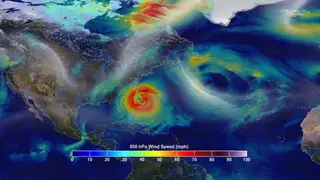
- A team from the Helmholtz Centre for Environmental Research (UFZ), Leipzig University and the Alfred Wegener Institute in Germany published online on 28 October 2026 in Science Advances a study of the floods Storm Boris caused in central Europe in September 2024.
- According to the analysis, Boris rainfall would have been 6% to 9% lower without human-caused climate change.
- Flood peaks, by contrast, would have been on average 14% to 22% lower.
- That means warming amplified flood peaks 2.1 to 2.9 times more than the increase in the event’s rainfall.
Why it matters
- Attribution studies usually calculate how much climate change increased extreme rainfall. This work shows that such a calculation underestimates the effect on floods.
- The relationship between rain and river flow is not linear: a saturated basin responds to small increases in precipitation with larger floods.
- The authors argue the finding should be built into risk assessments and loss estimates, which today rely mainly on rainfall.
The number
2.1 to 2.9 times. That is how much human forcing amplified flood peaks relative to the increase in Boris rainfall.
Context
The team used a “storyline” approach: it reproduced the real storm with two climate models nudged to the observed atmospheric circulation and simulated the same event in a climate without human warming. It then coupled those results with two hydrological models across hundreds of affected catchments.
Mamífero has covered how the climate is changing rain and ice extremes: extreme rainfall in southern Africa could double in frequency, a Baffin ice cap was halted on its way to a new ice age by warmth and glaciers ending in water lose more than half of the ice. In forecasting, a probabilistic method doubled the skill of ECMWF’s AI at weekly ranges.
What’s next
- If the result holds for other storms, flood defence plans will need larger margins than rainfall alone suggests.
- Insurers and governments can use the method to estimate what share of losses is due to warming.
- For mountain basins in Chile and other Andean countries, with soils that saturate quickly, the approach offers a more realistic way to calculate flood risk.
Bottom line
Measuring only rain leaves part of the damage out. With Boris, a single-digit rise in rainfall became a double-digit rise in flooding. For those planning defences and insurance, the figure that matters is river flow.
Sources
- Miersch, P., Dunkl, I., Sánchez-Benítez, A. et al., “Evidence from 2024 Storm Boris indicates anthropogenic climate change amplifies floods more than extreme precipitation”, Science Advances, published online 28 October 2026, DOI 10.1126/sciadv.aef7703. Date and abstract confirmed on Crossref.
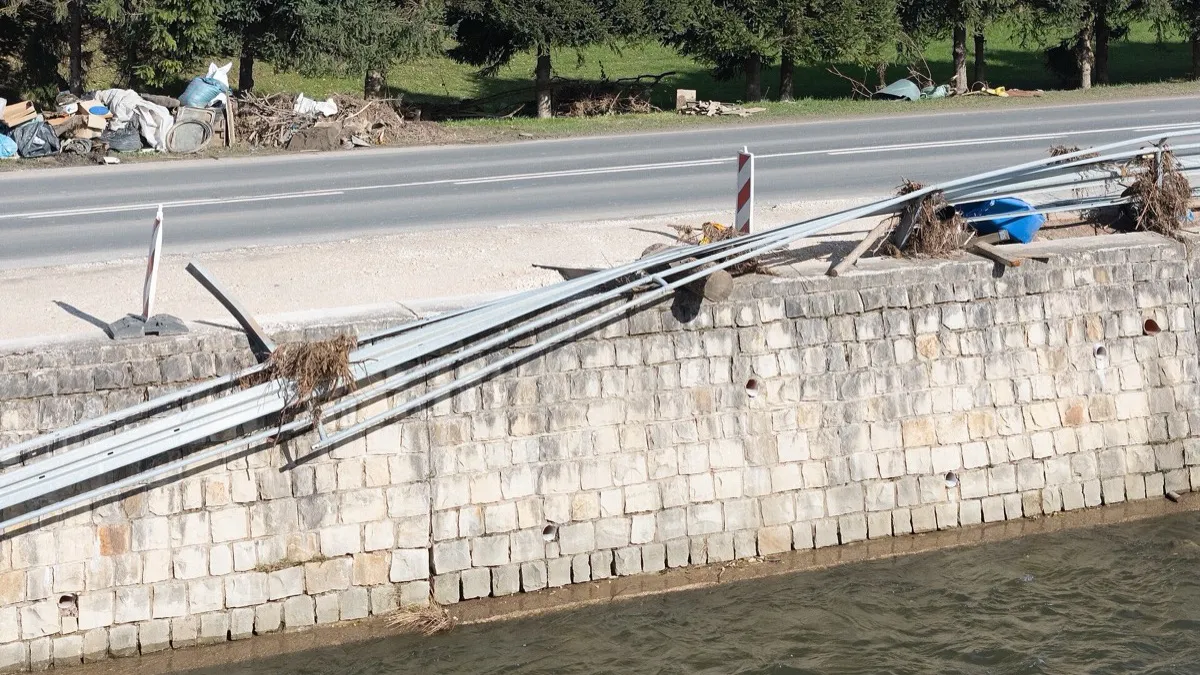
- Cover image: Jacek Halicki, CC0, via Wikimedia Commons
Edited by Rodrigo Cornejo. How we select and verify: who writes these notes.