What happened
- Dhungana and Flament published on 4 November 2026 in Nature a modelling study on the origin of the Great Unconformity, the globally extensive erosive surface that appears just before the Cambrian explosion of life.
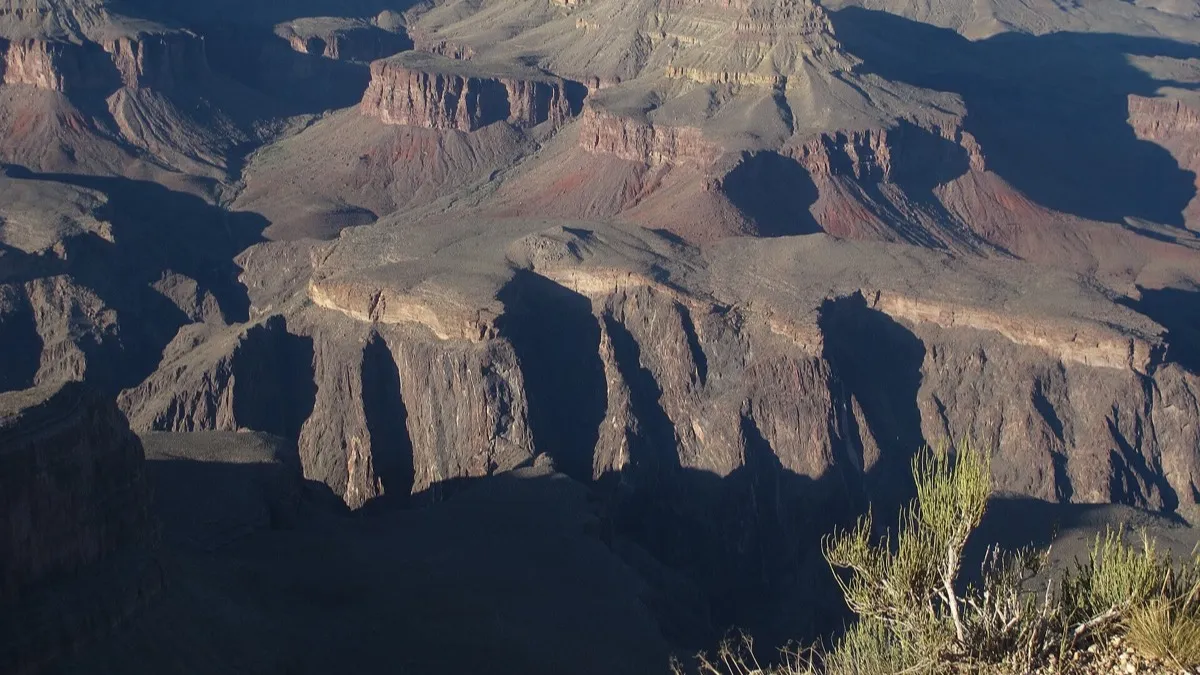
- The Great Unconformity marks a gap in the rock record: hundreds of millions of years of material are missing, which betrays enormous erosion.
- Proposed explanations included glacial erosion during Snowball Earth, rifting and plume activity, sea-level fall and mantle-driven dynamic topography.
- The authors argue that the dynamics of those processes had not been tested, and that their models point to the mantle.
Why it matters
- The Great Unconformity appears on different continents and is associated with climatic and environmental shifts before animals diversified.
- If the main driver lies in the planet’s interior, the discussion stops turning on ice alone and moves to mantle circulation.
- The work links a structure visible in the field to processes occurring hundreds of kilometres below the surface.
The number
Three ancient continents. The models predict prolonged continental uplift during the Neoproterozoic and long-term subsidence during the Phanerozoic for Laurentia, Baltica and North China.
Context
Dynamic topography is the deformation of Earth’s surface caused by mantle currents: hot rising material lifts the crust and descending material pulls it down. According to the study, that long-wavelength pattern is the ideal setting for forming and then preserving the Great Unconformity.
Sustained uplift through Cryogenian times would have produced marked erosion by the action of glaciers, which folds the role of ice into a deeper mechanism. The large area of Laurentia and the limited deformation at its margins would explain why the unconformity is best preserved and documented there. The models also predict cycles of dynamic topography that are broadly reflected in the volume of sediment preserved across continents.
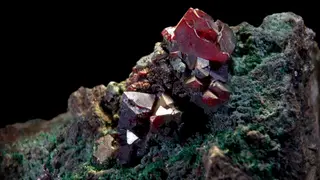
At Mamífero we follow deep geology. We reported that isotopes in the air of Pozzuoli reveal CO₂ from the volcano beneath the city and that Chang’e-6 suggests KREEP is more widely spread on the Moon’s far side. Also that a Baffin ice cap was regrowing towards a new ice age and that copper oxide grows outward and inward at once.
What’s next
- The authors suggest their approach opens avenues for understanding the environments in which Cambrian animals diversified.
- Testing the predictions against the sedimentary record of more continents will put the model to the test.
- How much each process contributed remains to be pinned down, because ice is still part of the explanation.
Bottom line
An absence in the rocks had been demanding an explanation for over a century. This work proposes looking for it underfoot, in a mantle that lifts and sinks entire continents.
Sources
- Dhungana and Flament, “The deep Earth origin of the Great Unconformity”, Nature, 4 November 2026, DOI 10.1038/s41586-026-11156-5. This note is based on the paper’s abstract.
- Cover image: Mikenorton, CC BY-SA 4.0, via Wikimedia Commons
Edited by Rodrigo Cornejo. How we select and verify: who writes these notes.