What happened
- Researchers described a new fish species in the Brazilian Amazon, Laimosemion laranja, and warned it may already be threatened. ScienceDaily reproduced Pensoft’s release on November 8, 2026.
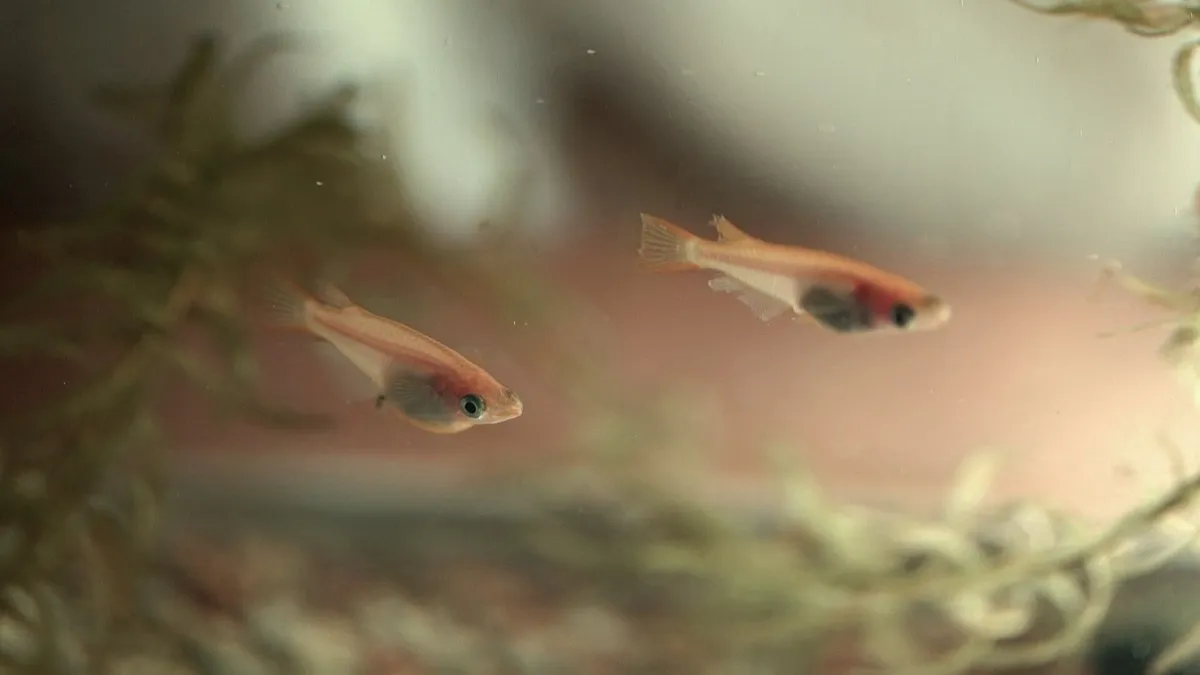
- It is a killifish, a small freshwater fish under three centimeters long. Males have rows of orange spots on the front half of the body and orange chevrons near the tail.
- It was found in the Rio Cajari drainage in southern Amapá, and only in three small forest pools.
- The habitat faces mining, deforestation, pollution and urban expansion.
Why it matters
A species known from three small pools has very little margin if that habitat changes. The authors call for urgent conservation measures and highlight how much remains to be discovered in poorly studied and increasingly threatened parts of the Amazon.
The name “laranja” means orange in Portuguese and honors the municipality where it was found, Laranjal do Jari. The researchers wanted a name that would connect with the people of the region.
The number
Under three centimeters. The reference specimen (holotype) is a male of 26.8 millimeters standard length. The find happened while the team was studying how life-history strategies evolved in fishes of the family Rivulidae across Brazil’s biomes.
Context
The coloration caught attention at once, but it was not enough to declare a new species. The team analyzed body proportions, counted scales, studied skeletal features, compared them with related species and analyzed mitochondrial DNA. Genetics confirmed it was a distinct species.
Yuri Abrantes, of the Federal University of Rio Grande do Norte, the study’s lead, said it was “an unexpected moment.” The team includes scientists from the federal universities of Rio Grande do Norte and Pará, the Instituto Peixe das Nuvens and the University of West Florida.
Some members of this group of fishes survive in habitats that dry out seasonally: their embryos stop developing and stay dormant in damp mud until rains refill the pools. The study, published in Zoosystematics and Evolution, could help understand the evolution of Amazonian killifish.
At Mamífero we have followed biodiversity studies. Schooling evolved more than 300 times in fishes, mussels keep vanadium and iron in separate systems for their adhesive, bacterial chitinases evolve according to their job and a single number is proposed to measure the permanence risk of removed carbon.
What’s next
- Its conservation status still needs evaluating with the formal threat criteria.
- The authors call for protection of the pools where it lives.
- The study of its life cycle could contribute to the evolution of fishes of the family Rivulidae.
Bottom line
A fish under three centimeters, found in three pools, sums up how little is known and how vulnerable the Amazon is. The question now is whether the habitat is protected before it changes.
Sources
- ScienceDaily, “Scientists discover stunning new Amazon fish that may already be endangered”, November 8, 2026, link. Reproduces the Pensoft Publishers press release.
- Abrantes, Y. G. et al., “A new killifish of the genus Laimosemion (Cyprinodontiformes, Rivulidae) from Rio Cajari in the Brazilian Amazon”, Zoosystematics and Evolution 102(4), 2026, DOI 10.3897/zse.102.187659.
- Cover image: 些細な日常, CC BY-SA 4.0, via Wikimedia Commons
Edited by Rodrigo Cornejo. How we select and verify: who writes these notes.