What happened
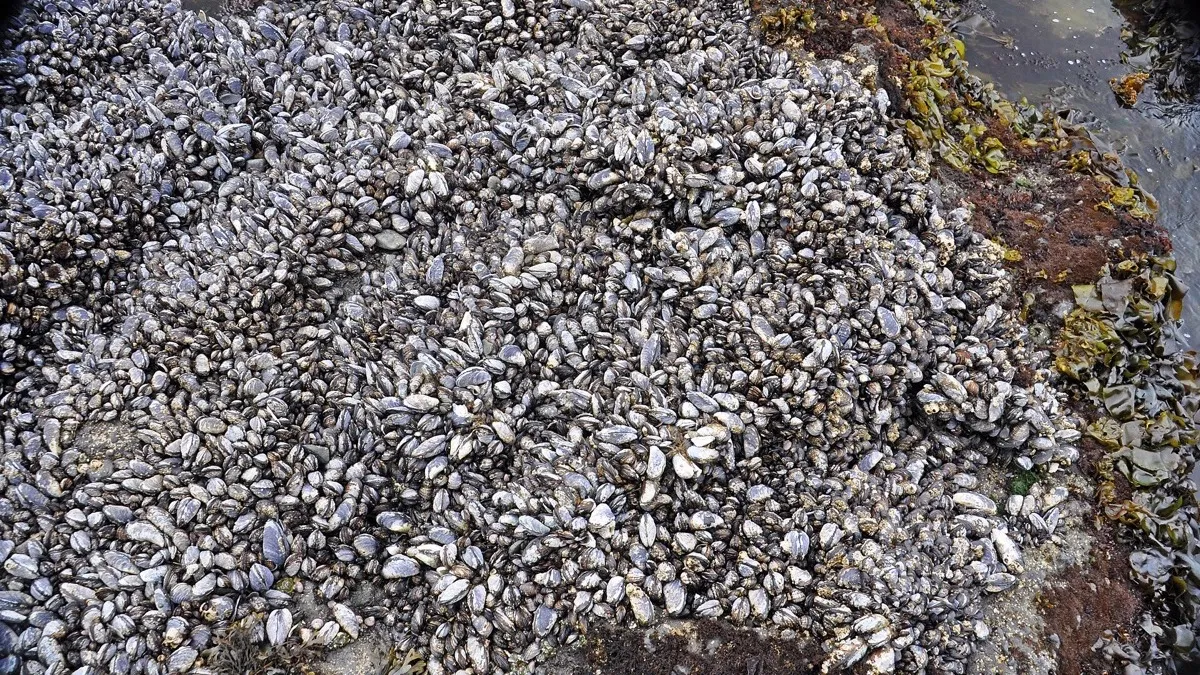
- Six researchers, with Jee, Singh, Merino and Babych among the authors, published on 6 November 2026 in PNAS a study on how mussels store metals to make their adhesive.
- Mussels anchor to the seabed with the byssus, a bundle of adhesive protein fibres, which withstands the pounding of waves.
- The strength of that anchoring depends on protein-metal cross-links mediated by DOPA residues, an amino acid that coordinates metal ions. Those links improve adhesion, abrasion resistance, toughness and self-healing capacity.
- The natural process of metal incorporation during byssus formation was poorly understood.
Why it matters
- That knowledge gap limits the field of mussel-inspired materials, which has existed for decades and has not met its full potential.
- Understanding how the animal stores and delivers each metal gives clues for designing metal-reinforced adhesives and coatings.
- The result shows that a marine organism specifically stores a metal that in biology is usually regarded as a trace element.
The number
Two metals, two stores. Vanadium is stored on the basis of DOPA, while iron is kept in ferritin-like structures. Both metals occupy separate coordination environments inside the mussel foot.
Context
The team investigated the natural biofabrication system, the mussel foot, with a set of spectroscopic techniques at several scales: confocal Raman spectroscopy, synchrotron X-ray fluorescence and X-ray absorption, and scanning transmission electron microscopy with X-ray analysis.
According to the authors, these findings lack precedent in the literature on the subject, and suggest that mussels evolved a catechol-based metal storage system to capture and keep an ion that is usually a trace, and later use it to mechanically reinforce their protein adhesives and coatings.
The study describes where each metal is stored, not how it is delivered or how its release is controlled when the byssus is made. Those questions remain open and are the ones that could guide materials design.
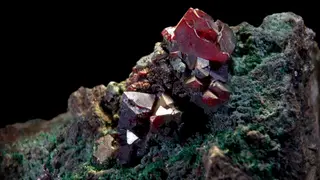
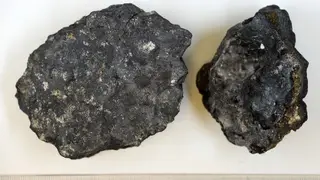
At Mamífero we follow materials and marine life. We reported that bacteria from a lake form magnetite with a signature useful for finding life and that copper oxide grows outward and inward at once. Also that marine reserves in Clarion-Clipperton barely exchange larvae and that chemists in Berlin take silicone apart to its monomer.
What’s next
- How each metal is delivered to the byssus during its formation remains to be described.
- Materials designers can use the two-store scheme as a model.
- Other molluscs with metallic adhesives could have similar or different systems.
Bottom line
The mussel does not mix its metals: vanadium goes one way and iron another. Behind an adhesive that withstands the waves lies fairly orderly logistics.
Sources
- Jee, Singh, Merino, Babych et al., “Mussels possess distinct vanadium and iron storage systems for fabricating metal-reinforced adhesive fibers”, PNAS, 6 November 2026, DOI 10.1073/pnas.2605203123. This note is based on the paper’s abstract.
- Cover image: James St. John, CC BY 2.0, via Wikimedia Commons
Edited by Rodrigo Cornejo. How we select and verify: who writes these notes.