What happened
- Nine researchers, with Lee, Bearpark, Kit and Meth-Cohn among the authors, published on 6 November 2026 in Nature Climate Change a proposal for a standard measure of permanence risk in carbon removal markets.
- Inspired by value at risk in finance, they call it carbon at risk, or CaR: a probabilistic measure of the shortfall between the removals contracted and the storage actually realized, at a given confidence level and time horizon.
- The authors calibrate it in two proof-of-concept applications: forest carbon and geological storage.
- According to the abstract, removal markets lacked a standardized, quantitative measure of this risk.
Why it matters
- Whoever buys a carbon removal wants to know how long the storage will last. A forest can burn and an underground reservoir can leak, so the promise is not equally firm in every case.
- A common figure allows very different technologies to be compared with the same yardstick and backup reserves to be set in proportion to risk.
- The authors propose using it for sizing buffers, pricing insurance and designing reserve funds, over both policy and climate horizons.
The number
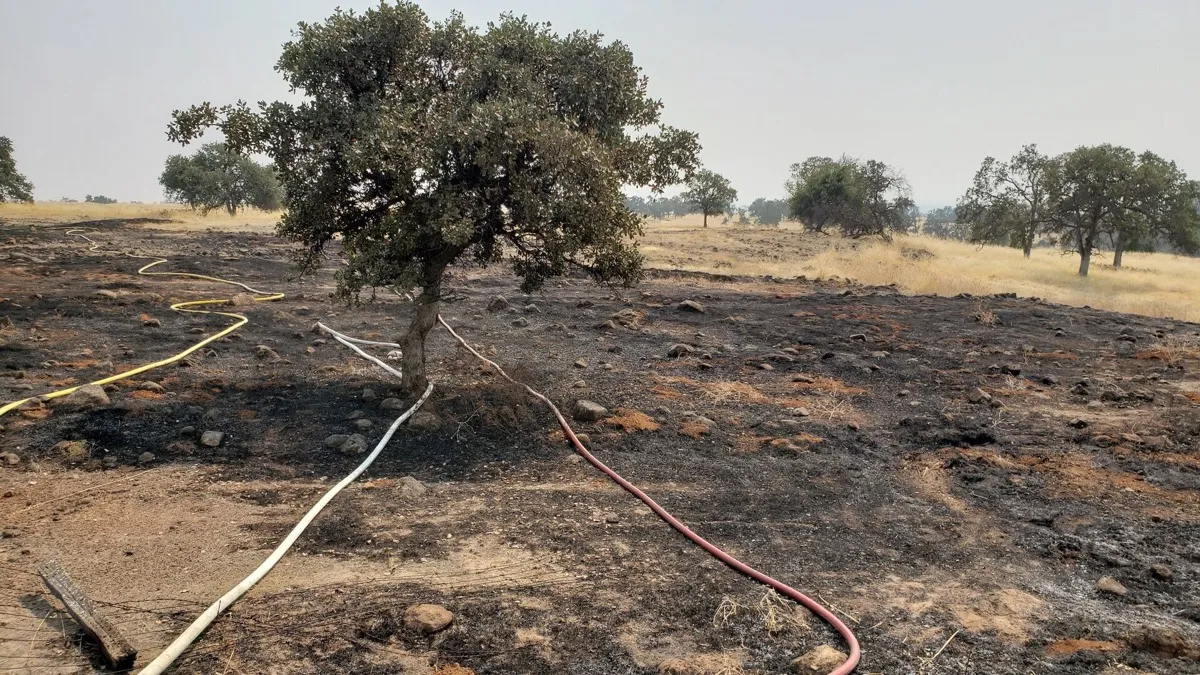
More than 70%. That is the CaR of a single forest project in California at 200 years, with 95% confidence, computed with Monte Carlo simulations driven by satellite fire data. It means that, at that confidence level, the shortfall between what is contracted and what is stored could exceed 70%.
Context
In geological storage, simulations with the Storage Security Calculator give a 95% CaR ranging from 0.15%, for a well-regulated offshore site, to 17%, for a poorly regulated onshore one. The difference reflects how much the regulatory framework weighs and not only the geology.
The study also shows that combining technologies in a portfolio helps manage tail risk at lower cost. The minimum cost of meeting a permanence target depends on the magnitude and correlation structure of the key risk factors.
These are two test cases, not a full catalogue of the industry, and the figures depend on the assumptions of each simulation. The value of the work lies in proposing a common way to express risk, independent of technology, rather than in the specific figures.
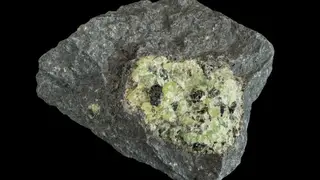
At Mamífero we follow carbon in nature. We reported that Cerrado soils hold carbon that markets ignore and that ground olivine stores more carbon only if microbes have food. Also that seagrass meadows bury less carbon than estimated and that nitrogen reaching forests and grasslands suppresses soil respiration.
What’s next
- Buyers and regulators can test the indicator with their own projects and data.
- Calibration with more regions and technologies will show whether the measure holds.
- A standard figure could be used to set the size of the reserve funds that back removals.
Bottom line
Promising that carbon will stay stored for 200 years requires saying with what probability. This proposal puts a number on that doubt, and in some forests the number is very high.
Sources
- Lee, Bearpark, Kit, Meth-Cohn et al., “The carbon at risk measure for managing carbon removal risk and guiding portfolio construction”, Nature Climate Change, 6 November 2026, DOI 10.1038/s41558-026-02785-9. This note is based on the paper’s abstract.
- Cover image: Government of California, Public domain, via Wikimedia Commons
Edited by Rodrigo Cornejo. How we select and verify: who writes these notes.