What happened
- Fifteen researchers, with Hsu, Lu, Yang and Chen among the authors, published on 4 November 2026 in PNAS a study of the cellular mechanism by which lead impairs memory.
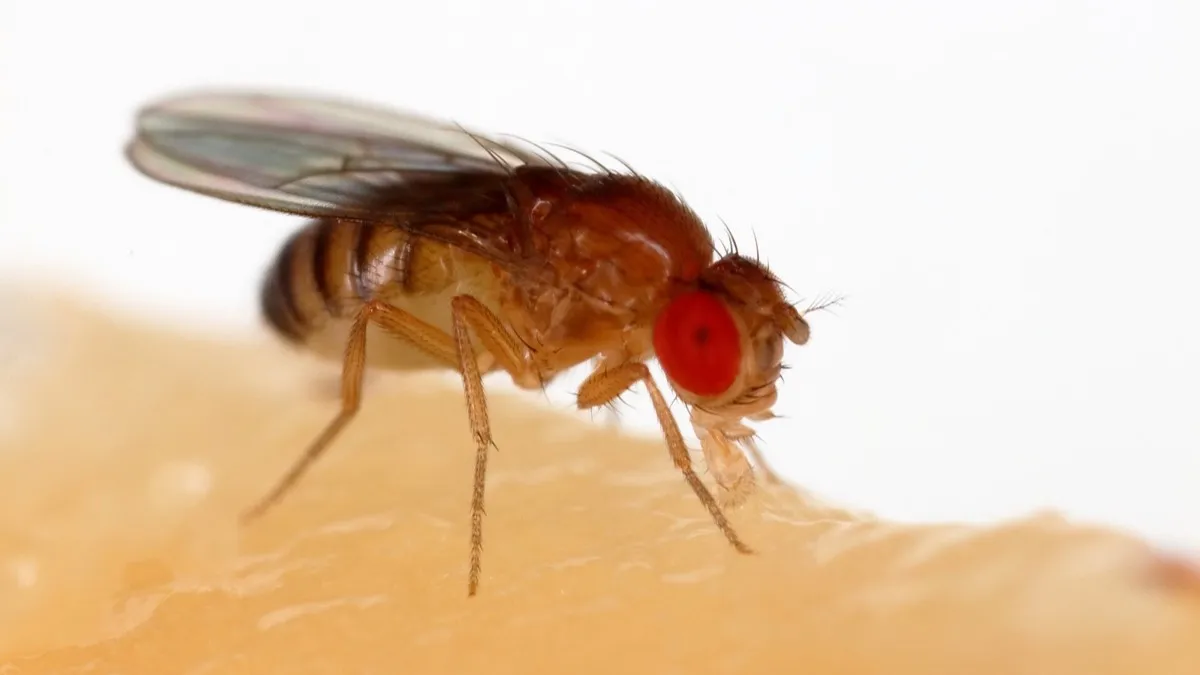
- They worked with Drosophila melanogaster, the fruit fly, exposed to the metal during development or already in adulthood.
- In both cases, exposure selectively disrupted long-term memory, the kind that depends on protein synthesis, and left other forms of memory intact.
- With a redox biosensor targeted to mitochondria, they observed that lead raises oxidative stress in cholinergic neurons and in DAL neurons, a key site for consolidating that type of memory.
Why it matters
- Lead exposure remains an environmental risk factor for cognitive function, and the cellular mechanism was unclear.
- Identifying the specific step that fails, training-induced protein synthesis, makes it possible to look for ways to intervene.
- The work offers a genetically tractable platform for studying other neurotoxic agents.
The number
Only one type of memory. Lead disrupted protein-synthesis-dependent long-term memory and spared the rest, a pattern that points to a specific step rather than general damage.
Context
The redox imbalance caused by lead suppresses the new protein synthesis triggered by training in DAL neurons, and so prevents memory consolidation. The biosensor used, mito-roGFP2-Orp1, makes that state visible inside the mitochondria of living cells.
Treatment with epigallocatechin gallate, an antioxidant present in green tea, restored mitochondrial redox balance and rescued long-term memory by reinstating activity-dependent protein synthesis. The result should not be stretched: these are flies under laboratory conditions, not a recommendation for exposed people.
At Mamífero we follow neuroscience and toxicology. We reported that the brain removes neurons with highly altered genomes around birth and that three neurons suffice for the rhythm of a fly’s walk. Also that smoke from the Eaton fire held 50 times more lead and that gold nanoparticles activate chosen neurons with infrared light.
What’s next
- The described mechanism can be tested in mammalian models before any clinical application is considered.
- The platform serves to evaluate antioxidant strategies against other metals.
- The public health measure remains avoiding exposure, not compensating for it afterwards.
Bottom line
Lead does not erase memory wholesale: it interrupts the step where an experience becomes permanent. Knowing which step that is opens a door, even if for now it is only open in flies.
Sources
- Hsu, Lu, Yang, Chen et al., “Lead impairs long-term memory by disrupting mitochondrial redox homeostasis in Drosophila”, PNAS, 4 November 2026, DOI 10.1073/pnas.2612578123. This note is based on the paper’s abstract.
- Cover image: Sanjay Acharya, CC BY-SA 4.0, via Wikimedia Commons
Edited by Rodrigo Cornejo. How we select and verify: who writes these notes.