What happened
- A team led by Cheng Liu, Jian Wang and Hong Wan published on November 7, 2026 in Nature Communications a process to selectively depolymerize the PET in mixed textiles.
- For heat-treated textiles, PET methanolysis occurs quickly and with high selectivity under mild conditions.
- The process yields DMT (dimethyl terephthalate) monomer at 99.92% purity or more and a 91% yield.
- A techno-economic analysis indicates the strategy is competitive, according to the authors. This note is based on the paper’s abstract.
Why it matters
PET is the second largest source of plastic waste. The ideal is to convert it chemically back into its monomers, but for PET-containing textiles that was until now cost-prohibitive: chemical depolymerization also degrades other components of mixed garments and produces complex mixtures that are very costly to separate and purify.
Garments are rarely made of one material; polyester is often blended with cotton and other fibers. A method that attacks only the PET without destroying the rest simplifies the recycling chain.
The number
91% yield, 99.92% purity. These are the figures for the DMT monomer the process recovers from heat-treated mixed textiles. At that purity, DMT can be reused to make new PET, which closes the material loop.
Context
PET, polyethylene terephthalate, is used in bottles and polyester fibers. Methanolysis is a reaction with methanol that breaks it into its building blocks. The innovation the authors report is that after a thermal treatment of the textiles, that reaction can be done quickly and selectively, without attacking the other fabric components.
The abstract gives no detail on conditions, the types of blends or costs, which are in the full text, not reviewed. It also does not say whether the process was tested at industrial scale. The authors speak of a “feasible closed-loop option” for a polymer they describe as indispensable.
At Mamífero we have followed waste and green chemistry research. Singapore turned cadmium waste into anodes for aqueous batteries, ground olivine stores more carbon in soil only if microbes have food, a nickel catalyst reduces dilute CO₂ and electric pulses and light improve urea synthesis from CO₂ and nitrate.
What’s next
- A larger-scale test with real mixtures of used garments is missing.
- The techno-economic analysis will need confirming with plant data.
- The method will have to be compared with the textile recycling processes that already exist.
Bottom line
The advance is not in breaking PET, which is known, but in doing it without destroying the rest of the fabric. If the costs hold outside the lab, mixed polyester would stop being a hard-to-recycle waste.
Sources
- Liu, C., Wang, J., Wan, H. et al., “Selective depolymerization of poly(ethylene terephthalate) for economical closed-loop recycling of mixed textiles”, Nature Communications, November 7, 2026, DOI 10.1038/s41467-026-78713-4, link. The note is based on the paper’s abstract.
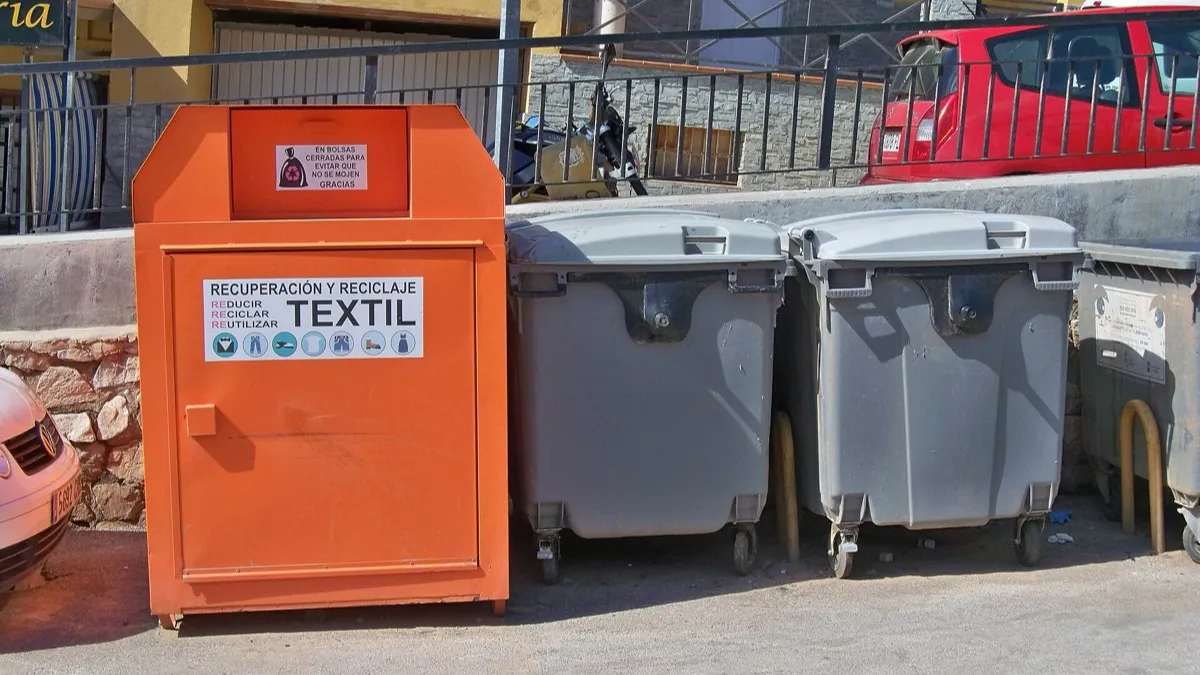
- Cover image: Daniel Capilla, CC BY-SA 4.0, via Wikimedia Commons
Edited by Rodrigo Cornejo. How we select and verify: who writes these notes.