What happened
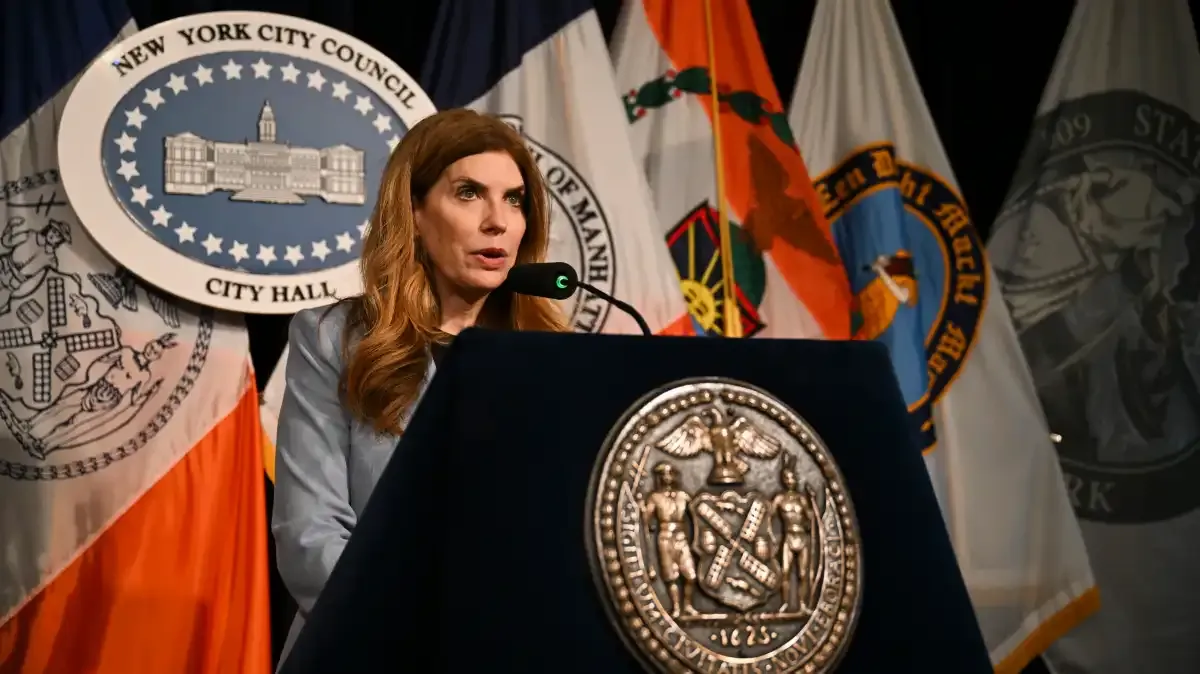
- On September 25, New York City Council Speaker Julie Menin introduced a package of bills to regulate artificial intelligence, according to the press release published on the Council’s website. They’ll be discussed on October 5 in a Committee of the Whole, the body that brings together all 51 council members.
- Bill 2602, from Menin, would make it illegal to market, offer or deploy an AI system in the city without third-party validation, which must review data quality, bias, decision outcomes, privacy and security, disclose conflicts of interest and verify that the system has a human shutdown switch. The fine is $25,000 per system, and it applies both to the company and to any validator who falsifies the review.
- Bill 2601, from Majority Whip Kamilah Hanks, would require contractors and the agencies awarding the contract to report any AI security incident in writing within 24 hours, and Cyber Command to publish it within the following 24 hours.
- Bill 2605 would let a whistleblower keep part of the fines collected from AI companies. Bill 2600, from Virginia Maloney, opens an individual right of action for foreseeable harm when the company didn’t put reasonable safeguards in place and a third party exploited that failure.
- Menin wrote to Dario Amodei, Sam Altman, Sundar Pichai, Elon Musk and Mark Zuckerberg asking for their participation, and made it clear that the Council reserves the power to issue subpoenas.
Why it matters
- The requirement doesn’t apply to the developer but to whoever markets or deploys. A Chilean company selling software with built-in AI to a counterparty in New York falls within the perimeter without having trained a single model.
- Mandatory outside validation creates a market of validators with their own liability. That role doesn’t yet exist in Chile, and whoever builds it first will set the price of entry to the U.S. market for everyone else.
- The 24-hour deadline to report and another 24 to publish turns the incident into almost immediate public information. That changes the crisis communications calculation: there’s no longer a window to get the story straight before the facts are known.
The number
A $25,000 fine for each AI system marketed without third-party validation.
Context
The pattern has already appeared in California, which bans auditing AI without state registration from 2029, and in the federal debate over a duty of care that would allow models to be blocked before release. New York adds the financial incentive for whistleblowers.
What’s next
- Committee of the Whole hearing on October 5, 2026, with all 51 council members called.
- The press release announces additional bills on deceptive deepfakes and on the effect of algorithmic tools on municipal employees’ tasks.
Bottom line
None of these texts is law yet: they’re bills with a hearing date. The difference with the Chilean debate is that here the calendar has already been published.
Sources
- New York City Council Unveils Legislative Proposals to Safeguard New Yorkers from Potential Risks of Artificial Intelligence, New York City Council, September 25, 2026.
Edited by Rodrigo Cornejo. This is not legal advice. How we select and verify: who writes these notes.