What happened
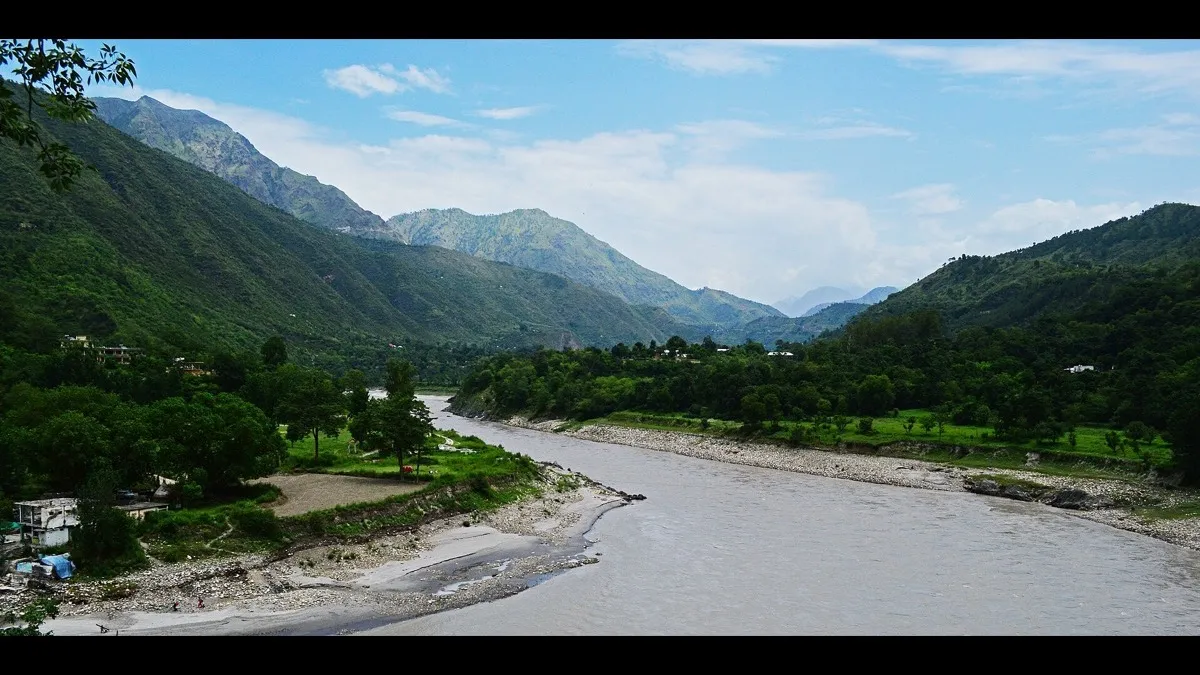
- A team led by Vimal Singh, Sampat K. Tandon and Debojyoti Basu Roy published on November 7, 2026 in Communications Earth & Environment a study of the Sutlej River, a snow-fed tributary of the Indus, at its exit from the Himalayan front.
- They combined geomorphic mapping, subsurface stratigraphy and optically stimulated luminescence dating.
- They identified a previously misidentified uplifted surface, the Ropar Surface, along with abandoned paleovalleys and fluvial terraces.
- This note is based on the paper’s abstract.
Why it matters
How much tectonics and climate influence the evolution of Himalayan rivers is debated. The study compares the Sutlej’s chronology with that of the collapse of the Harappan civilization, in the mid-Holocene.
The results indicate that the paleo-Sutlej’s abandonment was a prolonged, tectonically controlled process, not a short-lived event driven by climate. That questions models that give more weight to climate in the reorganization of river networks between the mountains and the foreland.
The number
Between more than 60,000 and 15,000 years ago. That is the span in which the drainage reorganization occurred, through river bifurcation and avulsion, according to the study. It is well before the mid-Holocene collapse of the Harappan civilization.
Context
Over long timescales the Sutlej occupied multiple flow strands, including one flowing west and one flowing south. That configuration was forced by tectonic uplift along a transverse structural zone linking segments of the Main Frontal Thrust.
Optically stimulated luminescence dates when sediments last saw light, and it allows ages to be put on terraces and abandoned channels. The abstract does not give each surface’s age or the number of samples, details that are in the full text, which was not reviewed.
The authors do not deny that climate played a role at other times; what they indicate is that, along this stretch, the reorganization happened well before the date associated with the Harappan crisis.
At Mamífero we have followed climate and landscape studies. Southern Africa’s extreme rains would double in frequency, without stone to carve, early humans avoided the Rub al-Khali despite water, glaciers ending in water lose more than half their ice and the Southern Ocean may have released CO₂ and explain half the Eocene rise.
What’s next
- Other groups will be able to apply the same methods to other rivers along the Himalayan front.
- Discussions of the Harappan collapse will have to consider that the Sutlej was already abandoned.
- It remains to be seen how this chronology relates to changes in other rivers of the region.
Bottom line
The change of course happened long before the collapse of Harappa. With that, the river’s abandonment stops being a direct candidate to explain that civilization’s crisis.
Sources
- Singh, V., Tandon, S. K., Basu Roy, D. et al., “Late Quaternary drainage reorganization of the Sutlej River system at the Himalaya mountain-foreland transition”, Communications Earth & Environment, November 7, 2026, DOI 10.1038/s43247-026-04204-5, link. The note is based on the paper’s abstract.
- Cover image: Darshan Simha, CC BY 2.0, via Wikimedia Commons
Edited by Rodrigo Cornejo. How we select and verify: who writes these notes.