What happened
- Researchers at the Indian Institute of Science, in Bengaluru, the University of Melbourne and the University of Southampton reported in Nature Climate Change on October 28, 2026 that Antarctic Intermediate Water is becoming saltier and denser.
- That layer forms in the polar Southern Ocean and, according to Ars Technica, sits between about 700 and 1,200 meters deep around Antarctica.
- For decades, up to 2015, expanding sea ice increased each summer’s meltwater, stratified the upper ocean and freshened that layer. Since 2016, repeated sea ice losses have reversed the trend.
- The authors combined Argo float observations with satellite and reanalysis data, and conclude that a hemisphere-scale reconfiguration of the pycnocline, the zone where water density changes quickly, is under way.
Why it matters
- Antarctic Intermediate Water is part of the global overturning circulation. It spreads north through the Indian, Pacific and Atlantic oceans and carries heat, carbon, oxygen and nutrients toward the tropics and even across the equator, co-author Bishakhdatta Gayen told Ars Technica.
- A change in its salinity and density can alter how the ocean mixes and how much heat and carbon it stores at depth.
- The study describes a turn usually associated with climate shifts over millennia, but happening within a few years.
The number
36 mSv per decade. That is the estimated net drop in sea ice meltwater input after 2016, against a rise of 14 mSv per decade before then. One millisverdrup equals 1,000 cubic meters per second.
Context
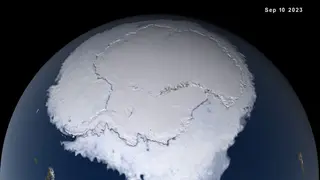
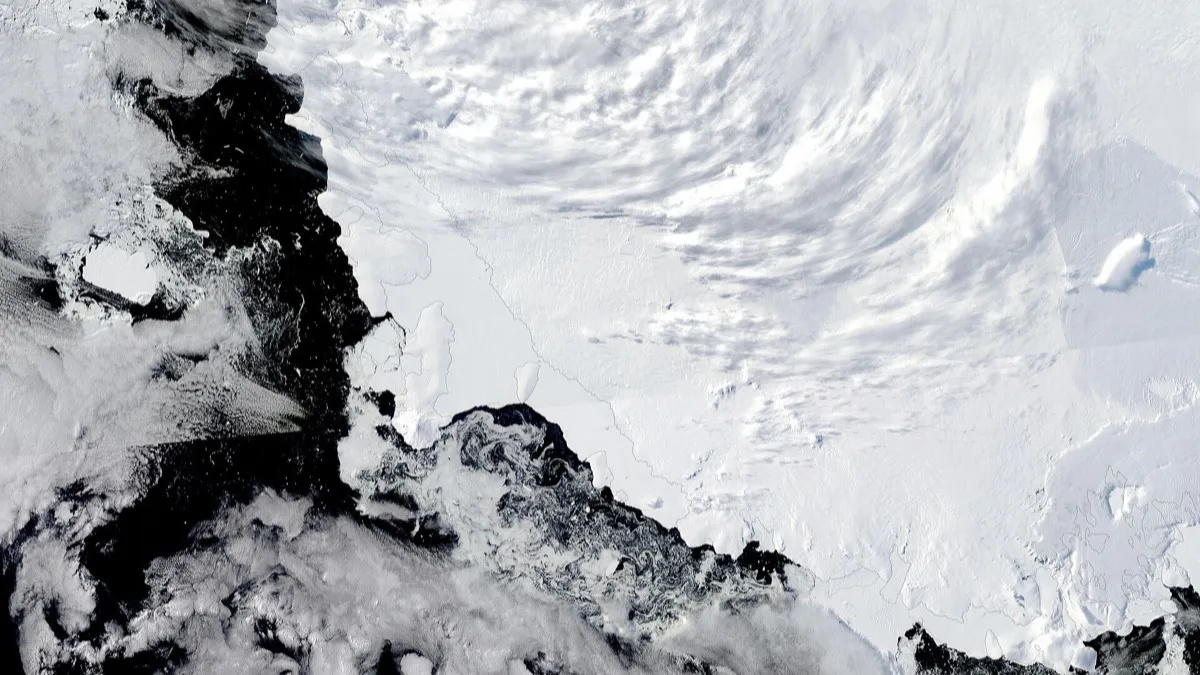
According to the paper, Antarctic sea ice expanded for several decades up to 2015. That trend broke in 2016, when years of repeated losses began. Less ice in winter means less melt in summer and therefore less fresh water mixing at the surface.
According to the paper, the core of Antarctic Intermediate Water increased its salinity at a rate of 4.8 thousandths of a gram per kilogram per decade, with a margin of 1.7 thousandths. The figure looks small, but in water masses this large, salinity changes alter density and, with it, the vertical structure of the ocean.
Ars Technica reports that the team used six independent datasets to track changes in the Southern Ocean since 2004.
What’s next
- The authors say the pycnocline reconfiguration is ongoing; its effect on the ocean’s uptake of heat and carbon will require models and more observations.
- How sea ice evolves over the coming winters will show whether the trend holds.
Bottom line
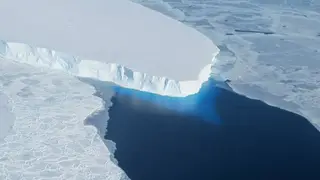
Southern ice is sending signals on several fronts: Antarctic sea ice reached 17.59 million km² in 2026, a low figure, and NASA adjusted its Thwaites model and its contribution to the sea could double. On glaciers, those ending in water lose more ice than the rest, and in the north, more algae in the Arctic will carry persistent pollutants.
Sources
- Nature Climate Change — Reversal of Antarctic Intermediate Water trends triggered by sea ice decline (Mishra, Gayen and Naveira Garabato, October 28, 2026)
- Ars Technica — A hidden ocean change near Antarctica could have global consequences (October 28, 2026)
- Cover image: MODIS Land Rapid Response Team, NASA GSFC, public domain, via Wikimedia Commons
Edited by Rodrigo Cornejo. How we select and verify: who writes these notes.