What happened
- Bosch announced that on 1 January 2028 it will move its semiconductor business, now part of the Mobility Electronics division, into a new division called Semiconductors. Semiconductor Today published the announcement on 3 November 2026.
- The new division will remain within the Mobility business sector. The change is part of the corporate restructuring Bosch announced at the end of October.
- The target is to reach €5 billion in semiconductor sales by 2030.
- Bosch will increasingly open its manufacturing capacity to external partners and systematically expand its foundry business, that is, making chips designed by others.
Why it matters
- “Semiconductors are the linchpin of our connected world and, at the same time, a key success factor for all of Bosch’s divisions,” said Markus Heyn, deputy chairman of the board of management of Robert Bosch GmbH and chairman of the Mobility sector.
- The company wants to sell chips beyond cars and consumer electronics such as phones and wearables. It is targeting robotics, where its chips are already used: “Bosch semiconductors already enable efficient control of humanoid robots,” Heyn said.
- Bosch already supplies sensors across the robotics industry, from robot vacuum cleaners to humanoids.
The number
€5 billion. That is the semiconductor sales target Bosch sets for 2030 with the new division.
Context
“By establishing our own unit, we’re opening a new chapter in our more than 60-year history in the semiconductor industry,” said Erik Rein, who runs the business. According to Rein, Bosch’s strengths lie in MEMS sensors and in how it integrates semiconductors into its systems, particularly silicon carbide chips and application-specific integrated circuits.
Bosch has about 40 semiconductor sites worldwide for research, development and manufacturing. In recent years it invested about €3 billion in its wafer fabs in Dresden and Reutlingen, Germany, and is spending about US$2 billion to equip its plant in Roseville, California, to make silicon carbide chips. It also plans to expand its test centre in Penang, Malaysia, and holds 10% of the ESMC joint venture in Dresden.
At Mamífero we follow the chip industry. We reported that CFS signed an 85 million letter of intent for power chips, that Shanghai is testing flat optics for EUV lithography and that Alibaba unveiled the Zhenwu V900 chip. In sensors, quantum dot photodiodes matched InGaAs in the infrared.
What’s next
- The Semiconductors division will start operating on 1 January 2028.
- From that date, Mobility Electronics will keep electronic control units and power electronics.
- Bosch will seek external partners for its foundry capacity and new markets for its sensors.
Bottom line
Bosch is taking its chips out of the car’s shadow and giving them their own target. The bet is that the same fab that makes sensors for cars can serve robots, phones and others who need somewhere to manufacture.
Sources
- Semiconductor Today, “Bosch to form dedicated semiconductor division, targeting growth in new markets”, 3 November 2026, semiconductor-today.com. It reproduces Bosch’s announcement.
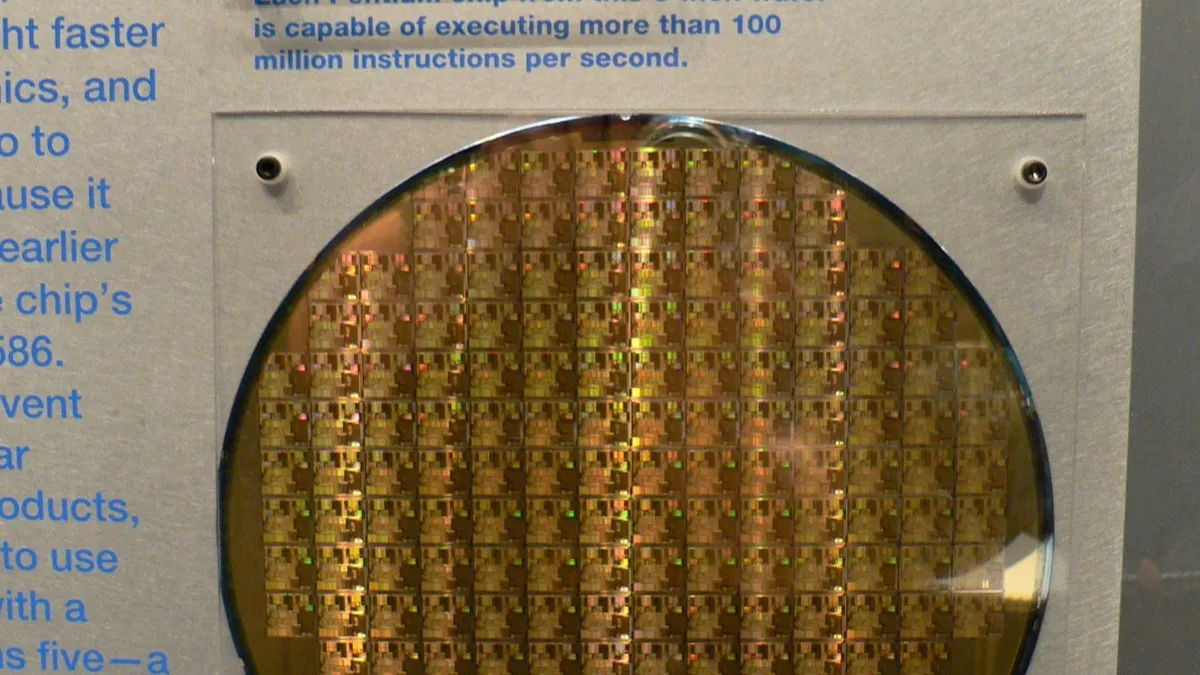
- Cover image: Naotake Murayama from Los Altos, CA, USA, CC BY 2.0, via Wikimedia Commons
Edited by Rodrigo Cornejo. How we select and verify: who writes these notes.