What happened
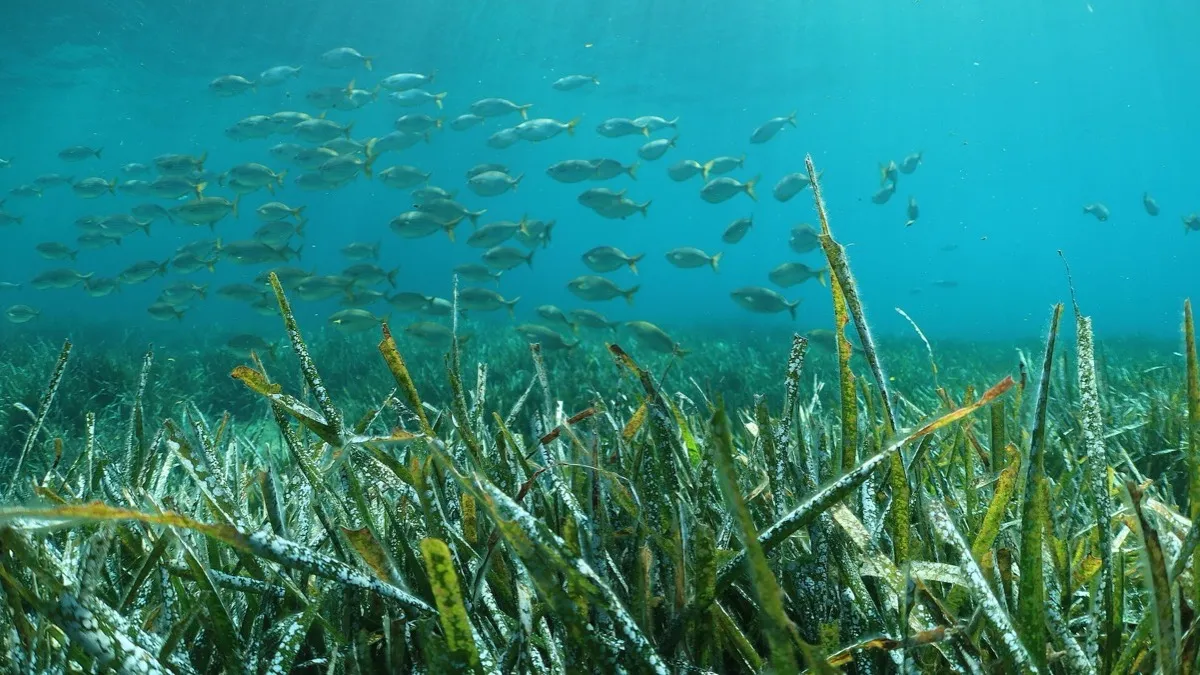
- Twenty-two researchers, with Arias-Ortiz, Lafratta, Colarusso and Fourqurean among the authors, published on 4 November 2026 in Nature Communications a new estimate of the organic carbon buried by seagrass meadows.
- They gathered 332 sediment cores, cylinders taken from the seabed that record the last century.
- Earlier figures, they explain, came from different methods applied to data biased by geography and species.
- The new calculation gives 25 ± 3 grams of carbon per square metre a year as a geometric mean, and 33 ± 9 grams as an area-weighted global average.
Why it matters
- Seagrass meadows underpin climate policy arguments and blue carbon projects. If the base figure changes, so does what can be promised with them.
- The downward correction is sharp, but it does not dismiss them: their contribution remains out of proportion to the area they occupy.
- Measuring better reduces the risk of counting carbon that is not actually being stored.
The number
6 to 15 teragrams a year. That is the global carbon burial they calculate, based on a revised area of between 247,700 and 366,400 km². It amounts to about a quarter of earlier benchmarks.
Context
Although they cover less than 0.1% of the seafloor, the meadows account for between 3-4% and 3-6% of the organic carbon buried in the ocean. Adding mangroves and tidal marshes, these vegetated coastal ecosystems reach between 8% and 13% of the oceanic total.
The study also explains what the variation between sites depends on. The rate results from the balance between how much carbon the sediment contains and how fast it accumulates. The two variables hold a negative exponential relationship through mineral dilution: when a lot of mineral sediment arrives, the share of carbon falls even if material piles up faster.
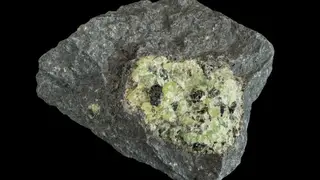
At Mamífero we have covered carbon in soils and seas. We reported that Cerrado soils hold carbon that markets ignore and that ground olivine retains more carbon only if microbes have food. Also that marine reserves in Clarion-Clipperton barely exchange larvae and that a 2-nanometre carbon membrane separates CO₂.
What’s next
- National inventories and blue carbon projects can recalculate their figures with this database.
- The range of mapped area is still wide, so the global total can be refined further.
- How burial changes where meadows degrade or are restored has yet to be measured.
Bottom line
Seagrass meadows store less carbon than they were credited with and more than their size would suggest. Conserving them still makes climate sense, now with better arithmetic.
Sources
- Arias-Ortiz, Lafratta, Colarusso, Fourqurean et al., “Seagrass sediment organic carbon burial rates are globally significant”, Nature Communications, 4 November 2026, DOI 10.1038/s41467-026-79168-3. This note is based on the paper’s abstract.
- Cover image: Karim saari, CC BY 4.0, via Wikimedia Commons
Edited by Rodrigo Cornejo. How we select and verify: who writes these notes.