What happened
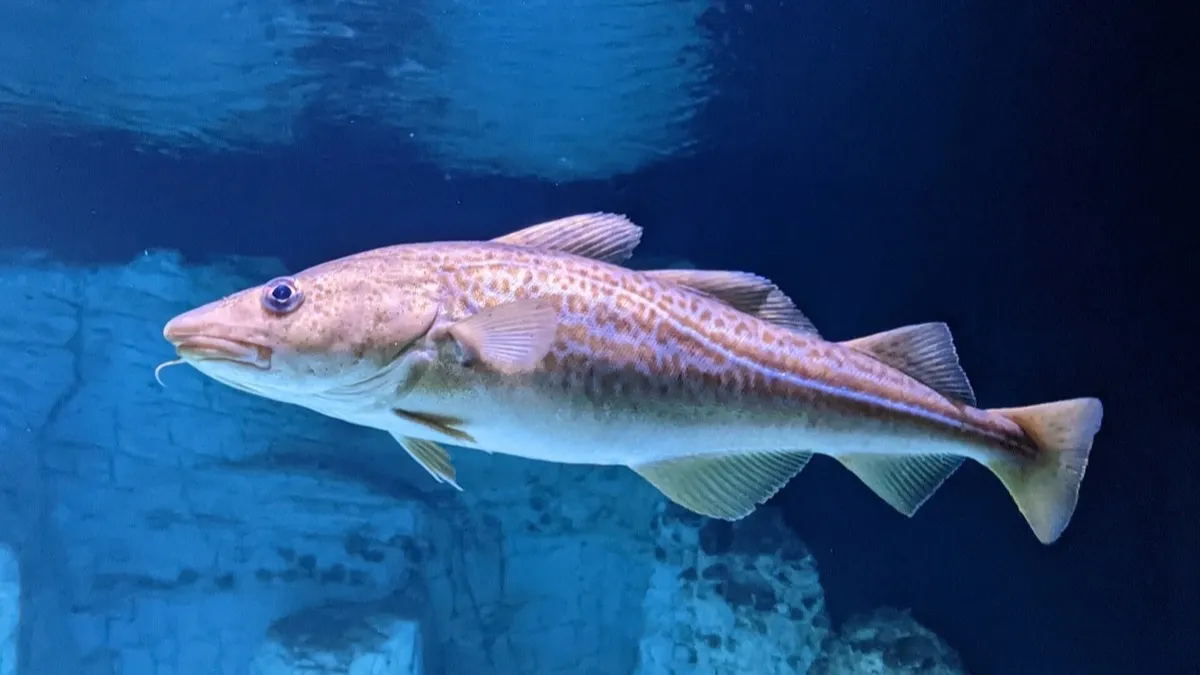
- Five researchers, Rey-Alfonso, Yilmaz, Chauvigné and Finn among them, published on 4 November 2026 in PNAS a study on how codfishes survive the loss of an essential gene.
- All Gadiformes, the order codfishes belong to, lost the aqp1ab-type genes needed to form hydrated pelagic eggs in marine fishes.
- Despite that loss, they produce some of the most highly hydrated floating eggs among marine teleosts.
- The explanation they propose: they recruited for that function Aqp4-type water channels, used by freshwater lineages during ovulation.
Why it matters
- Losing dispensable genes is common across the animal kingdom. Losing an essential one and surviving is far rarer, and here the mechanism is described.
- Cod is one of the most important fisheries in the North Atlantic, so understanding its reproduction has practical interest.
- The case shows how evolution reuses existing parts instead of inventing new ones.
The number
More than 450 million years. That is how long Aqp4-type channels have been chromosomally linked to Aqp1-type ones in jawed vertebrate genomes, a proximity that eased the handover.
Context
The team first confirmed that the mechanisms of osmotic drive are conserved in codfishes, as in other marine fishes that lay pelagic eggs. It then compared transcripts of aquaporins, the protein family that forms water channels in cell membranes, between distantly related freshwater and marine fishes.
Using immunolocalization, functional assays and inhibition experiments in zebrafish and Atlantic cod, they showed that short isoforms of Aqp4 are required for ovulation in more ancestral freshwater lineages, and that they were recruited into the oocyte hydration pathway of codfishes. The oldest and the most modern marine lineages laying pelagic eggs still use the aqp1ab genes.
At Mamífero we follow evolution and marine biology. We reported that the archaea closest to our cells were cultured and that 95 Neotropical bat lineages may be species still undescribed. Also that a hypothalamic RNA slows the decline in sperm quality and that three neurons suffice for the rhythm of a fly’s walk.
What’s next
- Whether other fish groups solved equivalent losses with the same resource remains to be seen.
- The role of short Aqp4 isoforms in ovulation raises questions about other vertebrates.
- Understanding egg hydration may help in farming marine species.
Bottom line
Losing an indispensable gene ought to be a dead end. Codfishes found the way out next door, in a neighbouring gene that had been there for hundreds of millions of years.
Sources
- Rey-Alfonso, Yilmaz, Chauvigné, Finn et al., “Codfishes survived essential gene loss by functionally co-opting freshwater ovulatory pathways to marine egg hydration”, PNAS, 4 November 2026, DOI 10.1073/pnas.2626713123. This note is based on the paper’s abstract.
- Cover image: Wilhelm Thomas Fiege, CC BY-SA 4.0, via Wikimedia Commons
Edited by Rodrigo Cornejo. How we select and verify: who writes these notes.