What happened
- Wired published on November 9, 2026 a report on an unlikely alliance against the data center Google wants to build in Thurrock, east of London.
- It brings together Buglife, an invertebrate conservation charity, local wildlife groups, Foxglove, which says the project would pollute too much, and the Thurrock Hammers motorcycle club, which wants to return to racing on the site.
- Last Wednesday, members of the groups protested outside Google’s office with placards demanding the company “search elsewhere.”
- That demonstration was one of several against data centers in Europe last week. In Amsterdam, protesters climbed a crane at a Microsoft site and unfurled an anti-AI banner.
Why it matters
Data centers are the infrastructure that supports AI models and other digital services. The British government wants to attract them to capture part of the investment in the sector and depend less on foreign partners for compute. But nearby communities object, as already happens in the US, and permitting processes drag on.
The case shows resistance does not come from one front: ecologists, a motorcycle club and a legal organization object for different reasons, which widens the base of the protest.
The number
1 of 1,000. Of the roughly 1,000 responses the planning authority received, only one supported the project. Thurrock Council says many were submitted from outside the local area.
Context
Google bought the site in 2023 through a subsidiary. In May last year it applied for permission to build a data center campus. On the plot remain the remnants of Arena Essex, a disused motorcycle racing stadium, next to grassland and a lake.
Opponents argue the proposal fails to account properly for the loss of the sporting facility, the destruction of habitat for an endangered plant and a rare bumblebee, and up to 570,000 tonnes of emissions a year, which Foxglove says cannot fit within the government’s carbon budget. Google replies that it will achieve a net biodiversity gain by retaining habitat and transplanting plants, that it will offset emissions by funding renewable energy with a carbon-neutral goal for 2030, and that the track has been out of use for years.
Wired notes that in the US some states have frozen permits or declared moratoria, and that pro-data-center candidates lost in this week’s midterm elections. In the UK, Foxglove won a legal challenge that forced the government to withdraw permission for another data center west of London. The council expects to rule on the initial application early next year.
We have followed this at Mamífero: Meta warned that electoral rejection of data centers will slow its expansion, Crusoe sold Google its unfinished Wyoming project, enterprise AI spending stalled between August and September and Puerto Rico used home batteries for 18 straight days on its grid.
What’s next
- Thurrock Council expects to rule on Google’s initial application early next year.
- After that, the company must submit a more detailed plan for the site, subject to another lengthy review.
- The groups say they will obstruct every stage: according to one spokesperson, these campaigns can go on for years.
Bottom line
The Thurrock dispute unites motives that rarely coincide and exposes a social cost of AI’s expansion. What the council decides will serve as a signal for other UK projects.
Sources
- Wired, “Bikers and Bug-Lovers Join Forces to Fight a New Google Data Center”, November 9, 2026, link.
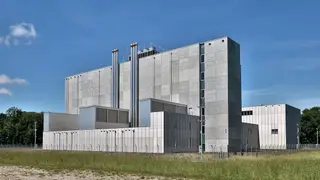
- Cover image: PiDatacenters, CC BY-SA 4.0, via Wikimedia Commons
Edited by Rodrigo Cornejo. How we select and verify: who writes these notes.