What happened
In the Lambayeque Valley of northern Peru, human sacrifice was practiced for millennia, but a study of skeletal remains found low levels of violence unrelated to sacrifice. The authors analyzed the skeletons of 1,519 people who lived between about 1500 B.C. and A.D. 1800, preserved well enough to detect trauma.
Why it matters
The result challenges the idea that societies with ritual sacrifice were also more violent in everyday life. Haagen Klaus, an anthropology professor at George Mason University and co-author, suggests that some mass sacrifices may have been attempts to appease the gods after El Niño events, the climate phenomenon that brings rain and floods to Peru and droughts elsewhere. The study leaves open whether sacrifice helped reduce violence.
The number
Only 25 skeletons (1.6%) had traumatic lesions consistent with conflict between people, and 77 (5.1%) had lesions elsewhere on the body consistent with accidents.
Context
Klaus gave examples of sacrifices: at the site of Sicán, around A.D. 1050 or 1100, about 200 people were killed and ritually buried during an intense El Niño. In addition, more than 200 children were sacrificed near present-day Huanchaco 600 to 800 years ago, possibly also during an El Niño. A skull from the Chimú period, roughly between 1375 and 1490, shows blunt-force trauma. The co-authors are Klaus and Thomas Snyder, a bioarchaeologist. On related topics, Mamífero published Coffee and less dementia after 43 years of follow-up; Rare autoantibodies found in people with schizophrenia; Lake Pavin bacteria leave chemical traces in magnetite and With no stone to knap, humans avoided the Rub’ al Khali.
What’s next
The authors warn that it cannot be concluded that sacrifice was the cause of the low violence; that relationship remains a hypothesis. Comparisons with other valleys and with societies in other regions are needed.
Bottom line
Skeletons offer a fact that accounts do not: the real frequency of injuries over three millennia.
Sources
- Live Science, article on the study by Haagen Klaus and Thomas Snyder (accessed November 9, 2026).
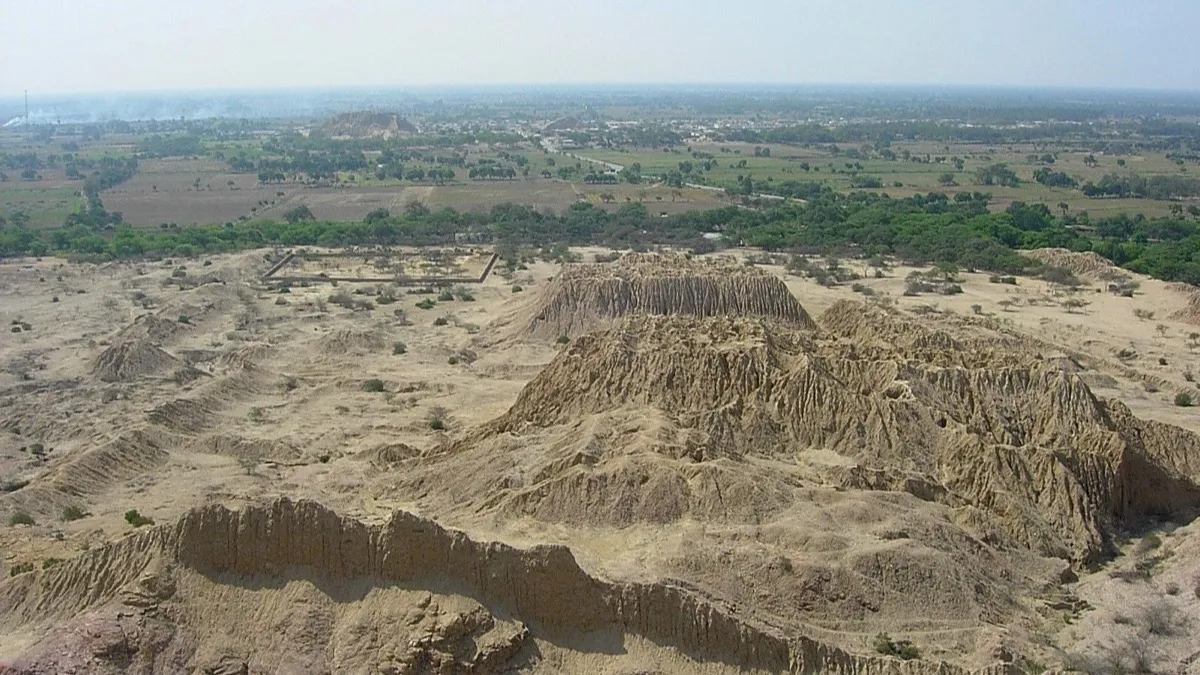
- Cover image: David Baggins (David Almeida), CC BY-SA 2.0, via Wikimedia Commons
Edited by Rodrigo Cornejo. How we select and verify: who writes these notes.