What happened
The Maya used so much cinnabar, the red mercury-sulfide mineral that gives the pigment vermilion, that they likely poisoned their lakes and waterways, a new study says. Researchers found extreme mercury levels in sediment cores in Mexico. The Maya painted almost everything red: sculptures, monuments, walls, plazas, pottery and also the dead at funerals.
Why it matters
The problem with cinnabar is that when paint washed into water, anaerobic bacteria turned it into methylmercury, a highly toxic form that accumulates in the food chain. The Maya relied heavily on freshwater fishing and freshwater shellfish. Lead author Matthew Waters, a paleolimnologist at Auburn University in Alabama, said they would have seen a strange color change in the water and a drop in its productivity, for example in fish as a protein source.
The number
Earlier studies had already recorded high mercury in the southern highlands and south-central lowlands of the Maya region; this work looks at lake sediments.
Context
For the Maya, red represented the sun, blood and life. Alongside cinnabar they used red ocher, whose color comes from hematite, a non-toxic iron mineral. The demand for red paint thus had an environmental cost, and the sediments kept the record. Waters pointed to sediments as an archive of ancient waters, something that helps reveal effects that texts and ruins do not show. On related topics, Mamífero published Municipal sludge emits more mercury than counted; UbiQD gets US$ 200,000 for a single-photon source; Proposal to put one number on removed carbon’s risk and A nickel catalyst reduces dilute CO₂ from flue gas.
What’s next
Researchers will want to compare more lakes and date the mercury rises precisely to relate them to periods of heavier construction. The effects on health and fishing also remain to be measured.
Bottom line
The case shows that metal pollution is an ancient practice and left marks legible thousands of years later.
Sources
- Live Science, article on the Auburn University study (accessed November 9, 2026).
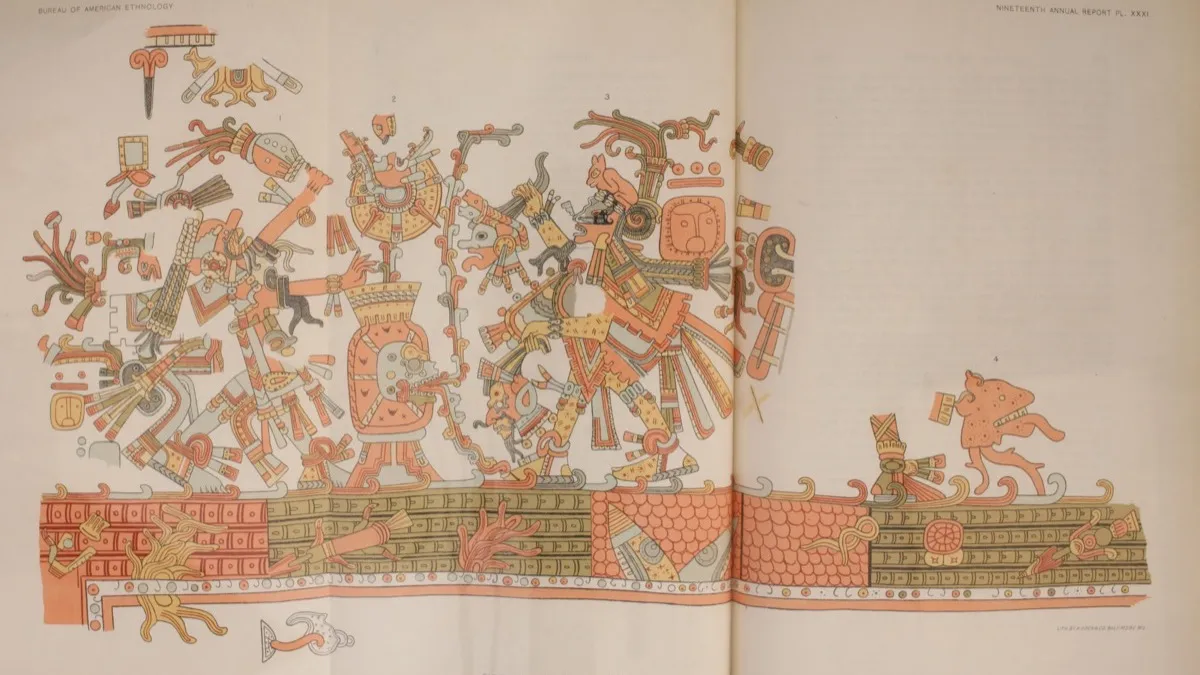
- Cover image: Thomas Gann (tracings); unknown Postclassic Maya artist(s) from Santa , Public domain, via Wikimedia Commons
Edited by Rodrigo Cornejo. How we select and verify: who writes these notes.