What happened
- Seven researchers, with Cai, Yang, Liu and Ma among the authors, published on 4 November 2026 in PNAS a study identifying municipal sludge disposal as a large source of mercury to the atmosphere.
- Wastewater treatment greatly reduces mercury pollution in rivers and lakes, but it does not eliminate it: part of it stays in the sludge.
- According to the study, in China that sludge emitted 42 megagrams of mercury in 2024, with a range from 32 to 60.
- That figure exceeds 10% of national anthropogenic emissions and ranks third, after cement production and nonferrous metal smelting.
Why it matters
- Mercury is a pollutant that travels far in the atmosphere and builds up in food chains, especially in fish.
- The work describes a transfer of pollution between media: what is taken out of the water ends up in the air if the sludge is incinerated or composted.
- If a source this size is missing from inventories, international assessments are incomplete.
The number
Nearly a thousandfold. That is how much these emissions have grown since the 1970s, according to the study, driven by the rapid expansion of sludge incineration, codisposal and composting.
Context
The authors stress where these emissions occur: they are concentrated in densely populated urban areas, exactly where most people live. That is an important difference from other industrial sources, which tend to sit further from cities.
The underlying point is uncomfortable for environmental policy: wastewater treatment is a sustainability measure that works, and even so it drags along an unforeseen effect. That is why the team asks for sludge disposal to be incorporated into the United Nations Environment Programme’s mercury budget and into assessments under the Minamata Convention, the international treaty on this metal.
At Mamífero we follow pollution and its routes. We reported that smoke from the Eaton fire held 50 times more lead and that more algae in the Arctic will drag more persistent pollutants to the seafloor. Also that Singapore turns cadmium waste into battery anodes and that chemists in Berlin take silicone apart to recycle it.
What’s next
- The concrete proposal is for international inventories to include this source.
- What happens in other countries with expanding treatment systems has yet to be measured.
- The choice between incinerating, composting or disposing of sludge now carries a measurable atmospheric consequence.
Bottom line
Cleaning water does not make mercury disappear: it moves it. This study puts figures on that move and asks treaties to count it.
Sources
- Cai, Yang, Liu, Ma et al., “Municipal sludge disposal emerges as a major, hidden, and rapidly growing atmospheric mercury source”, PNAS, 4 November 2026, DOI 10.1073/pnas.2616833123. This note is based on the paper’s abstract.
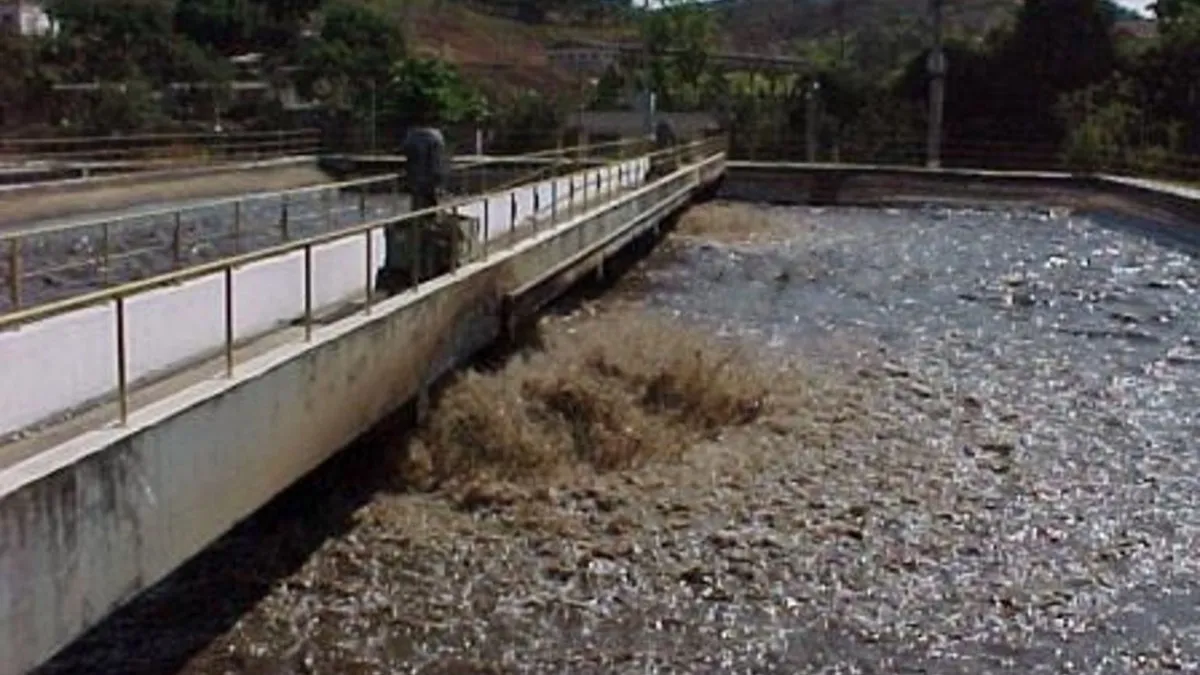
- Cover image: Marcos von Sperling, CC BY-SA 4.0, via Wikimedia Commons
Edited by Rodrigo Cornejo. How we select and verify: who writes these notes.