What happened
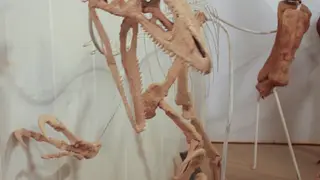
- An international team led by Curtin University found fossilized red blood cells and chemical evidence of blood molecules in the remains of Aratasaurus museunacionali, a meat-eating theropod dinosaur from northeastern Brazil.
- The remains are about 115 million years old.
- The results were published in the Proceedings of the National Academy of Sciences (PNAS) and ScienceDaily circulated them on 6 November 2026.
- They include amino acids associated with collagen, a structural protein of bones and connective tissue.
- Inside vascular canals of limb bones, researchers identified numerous mineralized red blood cells.
Why it matters
The authors say it is the first definitive chemical confirmation of hemoglobin-derived molecules inside fossilized dinosaur red blood cells. Cell-shaped structures had been described before, but not shown to contain those molecules. If delicate biological molecules can survive far longer than believed, it opens the door to studying the physiology of extinct animals and to searching for signs of ancient life elsewhere.
The number
115 million years. The age of the bones where heme groups were detected, components of the hemoglobin that carries oxygen in blood.
Context
Claims of soft tissue in fossils have been debated for decades, mainly over modern contamination and telling original material from microbial traces. That is why chemical analysis of heme is the key point. The text read gives no detail on contamination controls or how much of the original molecule remains. Caution is reasonable until other labs repeat the analysis. Related coverage: A skull kept for over a century reveals Europe’s first megaraptoran dinosaur, Chitin-degrading enzymes evolve according to their job: some are built from modules and others are not, Codfishes lost an essential gene and recycled another to hydrate their eggs, More than 400 enzymes designed from their evolution manage to break down PET plastic.
The heme group contains iron and gives hemoglobin its ability to bind oxygen. It is a relatively stable molecule, which makes it a good candidate to survive in a fossil. Detecting it inside the cell-shaped structures, and not scattered in the rock, is what the authors say sets this find apart from earlier reports. The final interpretation will depend on other teams getting similar results from independent samples.
What’s next
- Other teams can apply the same techniques to fossils of different ages and places.
- Researchers expect to establish how much information can be extracted from such old molecules.
- The technique could serve as a reference method for searching biomolecules in samples from other worlds.
Bottom line
A 115-million-year-old bone still holds traces of what ran through its veins. If other fossils confirm it, how long a molecule can last will need revisiting.
Sources
- ScienceDaily, “Scientists just found dinosaur blood that survived 115 million years”, 6 November 2026, on a Curtin University-led study in PNAS. The original paper was not read.
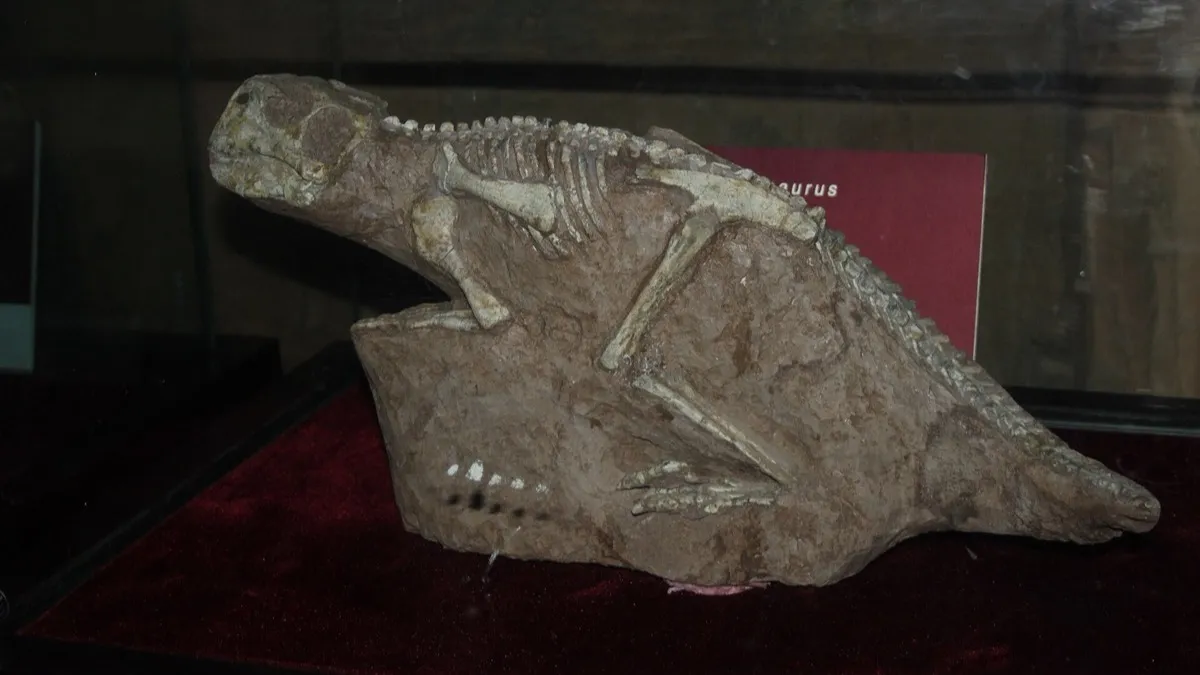
- Cover image: Gary Todd, CC0, via Wikimedia Commons
Edited by Rodrigo Cornejo. How we select and verify: who writes these notes.