What happened
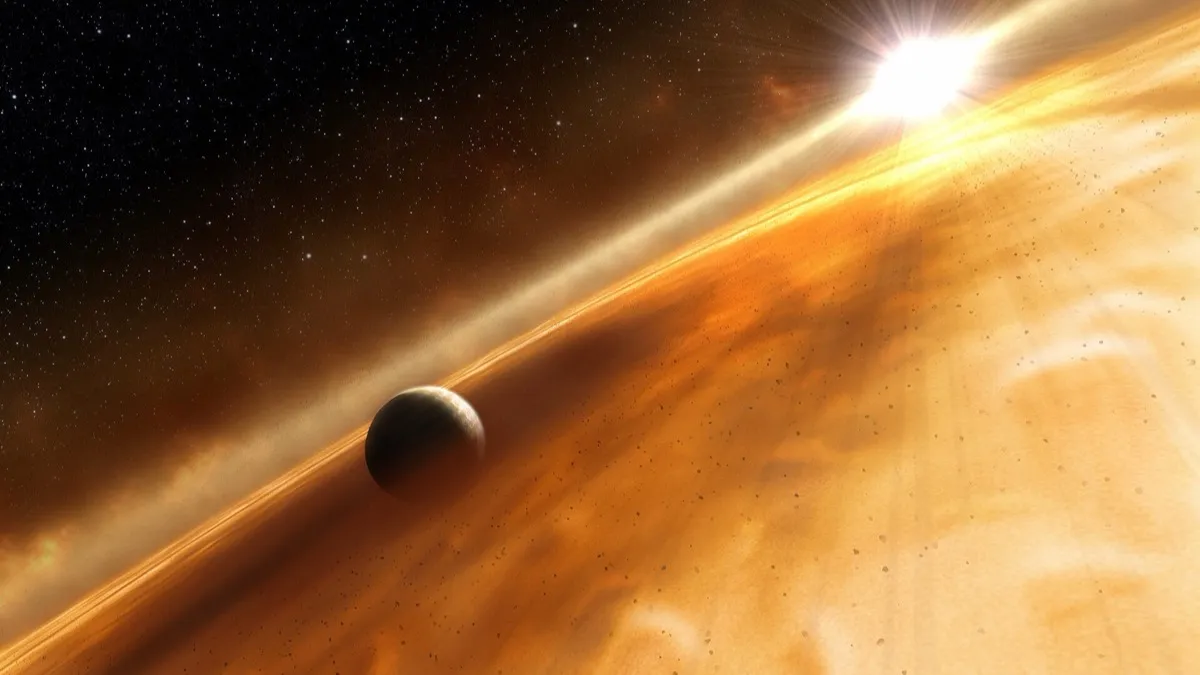
Astronomers at the University of California, Los Angeles (UCLA) reported the first known “disappearing planet.” It is TOI-2535 b, a “hot Jupiter”: a gas giant that orbits very close to its star, about 1,000 light-years from Earth. It completes an orbit in 8.25 days, roughly ten times faster than Mercury’s 88 days around the Sun. For seven years NASA’s TESS space telescope saw it pass in front of its star, until it stopped appearing in 2026. The study appeared in Astrophysical Journal Letters.
Why it matters
The finding shows that systems with several planets do not run like clockwork. The authors explain that the planet did not vanish: the gravity of a neighbor not yet observed is tilting its orbit, and the planet is leaving Earth’s line of sight. For astronomers it is a practical warning, because a planet that does not cross its star cannot be found with the transit method, the same one that has found most known exoplanets.
The number
Six hours. That is how much the transits of TOI-2535 b ran early or late compared with expectations, while also growing shorter and shallower year after year.
Context
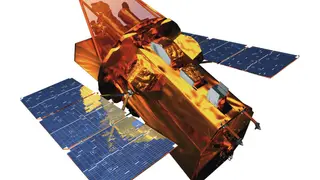
TESS finds planets by measuring tiny dips in a star’s brightness when a planet passes in front. That requires the star, the planet and the line of sight from Earth to line up. Between April 2019 and March 2026 the telescope watched that region many times, which showed that the transits did not follow a regular schedule. The team’s calculations indicate that the two planets influence each other so strongly that their orbits wobble like a top, and each ends up edge-on to its star until it leaves our view. Samuel Yee, a UCLA researcher and corresponding author, said this is the most extreme example of such an interaction he knows of, though other similar systems exist. On related topics, Mamífero published Coffee and less dementia after 43 years of follow-up; NASA asks how to extend Hubble’s life; NASA’s Swift telescope falls to Earth after 22 years and The mantle would explain Earth’s Great Unconformity.
What’s next
The next step is to confirm the neighboring planet and measure more precisely how much both orbits tilt. If the model is right, TOI-2535 b will cross in front of its star again when the wobble brings it back into the line of sight, and astronomers will be able to check it with new observations.
Bottom line
A disappearing planet teaches that the absence of a signal does not mean there is nothing there. In astronomy, watching the same patch of sky for years makes it possible to detect slow changes like this one.
Sources
- Phys.org, summary of the UCLA study published in Astrophysical Journal Letters (accessed November 9, 2026).
- Cover image: ESA, NASA, and L. Calcada (ESO for STScI), Public domain, via Wikimedia Commons
Edited by Rodrigo Cornejo. How we select and verify: who writes these notes.