What happened
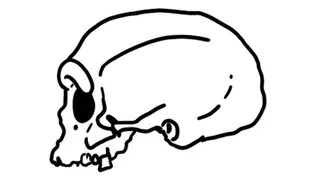
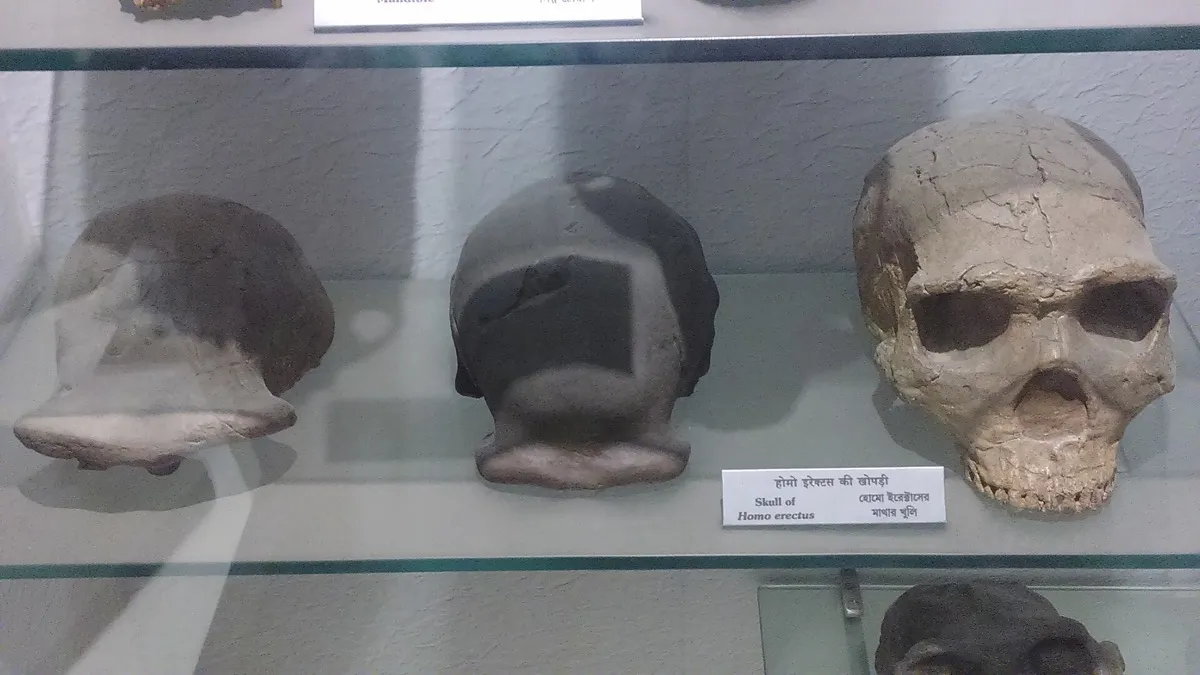
A study published in Nature by Qiaomei Fu of the Chinese Academy of Sciences and colleagues recovered biological information from Homo erectus fossils too old to retain DNA. Instead of genetic sequences, they extracted proteins from the enamel of six teeth from three sites in China: Zhoukoudian, Hexian and Sunjiadong, about 400,000 years old.
Why it matters
For much of the twentieth century, human evolution was thought of as a tidy tree, with each species a branch. Recent studies changed that. The new work indicates that Homo erectus exchanged genes, probably through interbreeding, with Denisovans in East Asia about 400,000 years ago, and that part of that inheritance passed to present-day people in the Philippines, Papua New Guinea and Southeast Asia.
The number
The six specimens share an amino acid variant not seen in any other hominin, which groups them as a distinct group.
Context
Enamel is the hardest tissue in the body and its proteins survive long after DNA degrades. That unique variant confirms the fossils’ identity and settles a debate over whether the unusual Hexian fossils were Homo erectus. A second shared variant is not exclusive: it also appears in Denisovans, an archaic group known mainly from a cave in Siberia. Homo erectus is considered the first hominin to leave Africa and reach Eurasia about two million years ago, and the most geographically widespread human ancestor. On related topics, Mamífero published Xujiayao fossils are Denisovan, proteins show; The Bantu expansion rebuilt through languages and genes; Man survives knife through eye and brain and Chitinases evolve by modules according to their job.
What’s next
Reading proteins opens the possibility of studying even older fossils and those from warm climates, where DNA does not survive. The results will have to be tested against more specimens.
Bottom line
The question is no longer just when these populations lived, but whom they mixed with.
Sources
- ScienceDaily, analysis text on the study by Qiaomei Fu published in Nature (accessed November 9, 2026).
- Cover image: Royroydeb, CC BY-SA 3.0, via Wikimedia Commons
Edited by Rodrigo Cornejo. How we select and verify: who writes these notes.