What happened
- McGill University released a study on fossils from the Paja Formation in central Colombia, which ScienceDaily reproduced on November 8, 2026.
- Researchers found an Early Cretaceous marine ecosystem where Jurassic lineages nearing extinction lived alongside Cretaceous groups that were beginning to expand.
- Biologist Hans Larsson and Dr. Dirley Cortés, of the Centro de Investigaciones Paleontológicas (CIP), propose calling that pattern a “biotic inflection.”
- They published the work in Frontiers in Ecology and Evolution in 2026. The exact date of the paper does not appear in the release.
Why it matters
Major changes in life are usually tied to mass extinctions. This case suggests an important evolutionary transformation can happen without widespread destruction: old and new groups coexist for a time in the same ecosystem.
That invites a review of how fossil records from other handover moments are interpreted, and a search for evidence of coexistence before attributing everything to an extinction event.
The number
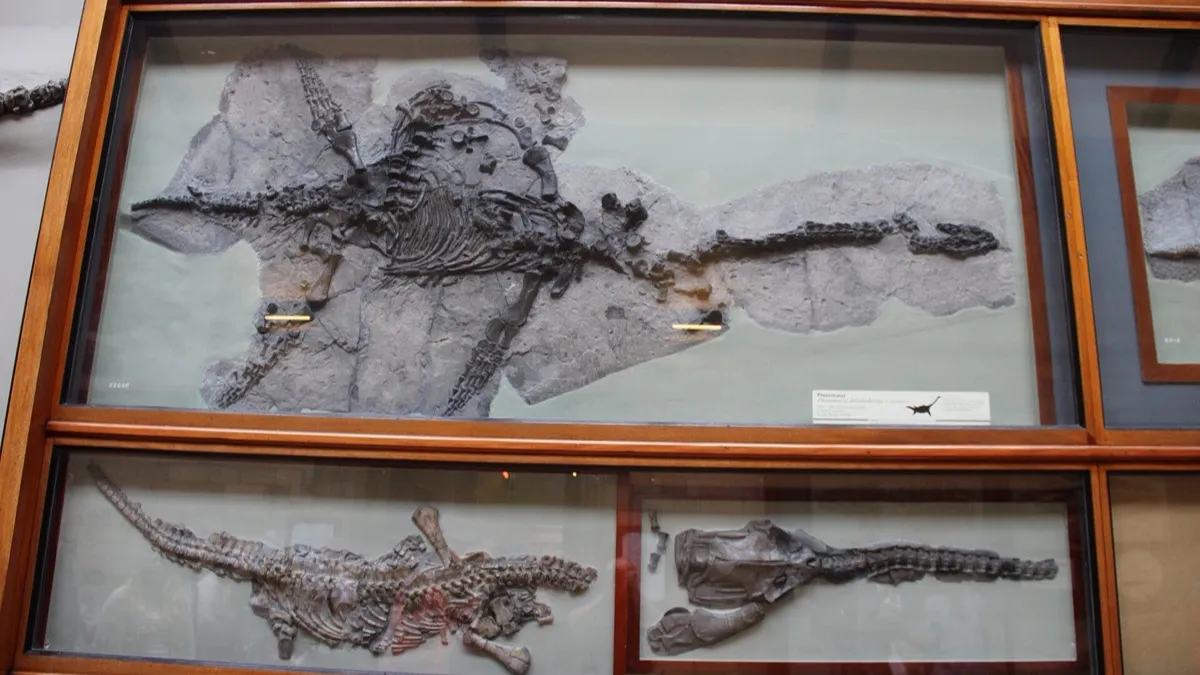
“One of the most ecologically complex marine communities found to date.” That is how Cortés describes the Paja Biota, made up of long-necked plesiosaurs, marine crocodile relatives, turtles, sharks, crustaceans and other animals. The quote is the researcher’s opinion, not a formal ranking.
Context
According to the authors, a combination of environmental conditions made this coexistence possible: warm greenhouse temperatures, elevated sea levels and nutrient-rich coastal waters. To that were added new ocean connections between the eastern Pacific and the early Atlantic through what is now Colombia.
Larsson describes it as a “perfect storm” of factors that promote ecological complexity that coincided with ancient lineages about to disappear, while new groups emerged.
The Paja Formation, near Villa de Leyva, has produced an exceptionally rich fossil record, and most of the fossils collected are housed at the CIP. The term “biotic inflection” is a conceptual proposal by the authors, which other paleontologists will need to evaluate with cases from other eras.
At Mamífero we have followed finds in evolution and paleontology. Blood molecules from a 115-million-year-old dinosaur were found in Brazil, bacterial chitinases evolve according to their job, schooling evolved more than 300 times in fishes and the Bantu expansion is reconstructed with languages, genes and kilns.
What’s next
- Other teams will be able to look for the same pattern in formations of similar age.
- The authors expect the concept to be discussed as an alternative to explaining handovers only by mass extinctions.
- The richness of Paja remains to be compared with that of other Cretaceous marine sites.
Bottom line
The find changes the question: not only what went extinct, but what it lived alongside. To validate the idea of a biotic inflection, more cases will be needed where old and new share an ecosystem.
Sources
- ScienceDaily, “An ancient ocean full of giant predators reveals a surprising twist in evolution”, November 8, 2026, link. Reproduces the McGill University press release.
- Cortés, D., Larsson, H. C. E., “The Paja Formation of Colombia records uniquely high biodiversity during a biotic inflection in an Early Cretaceous Gondwanan marine ecosystem”, Frontiers in Ecology and Evolution, 2026, DOI 10.3389/fevo.2026.1848892.
- Cover image: Gary Todd from Xinzheng, China, CC0, via Wikimedia Commons
Edited by Rodrigo Cornejo. How we select and verify: who writes these notes.