What happened
An owl fossil about 47 million years old, found at the German site of Messel, a UNESCO World Heritage Site, provides clues about when these birds became nocturnal. The new species, Masillastrix blattophaga, probably was still diurnal: its stomach holds the remains of an iridescent blue-green cockroach, and the shape of its feathers and wing bones points the same way. The study appeared in Current Biology.
Why it matters
It is unknown when, in the evolutionary history of owls, the shift from diurnal to nocturnal life happened, partly because most fossils amount to a few isolated bones. This specimen is different: the skeleton is complete except for the skull, and the wing and tail feathers were preserved. The Senckenberg researchers speculate that nocturnal activity developed between the middle and late Eocene, between 47 and 34 million years ago.
The number
The owl is about 12 centimeters long and is only the second owl species known from Messel, a site whose sediments were deposited in a forest environment.
Context
Gerald Mayr, an ornithologist at the Senckenberg Research Institute in Frankfurt, explained that the specimen was recovered in the 2025 excavation season. Sonja Wedmann, head of excavations at Messel, identified the insect in the stomach as a fossil cockroach from the shape and structure of the wing remains. Today most owls begin their day when darkness falls, and they hunt thanks to their hearing and wings that let them glide almost silently. On related topics, Mamífero published Gas over Alba Mons hints at a still-active Mars; Blood molecules from a 115-million-year-old dinosaur; A forgotten fossil reveals Europe’s first megaraptoran and Chang’e-6 suggests widespread KREEP on the far side.
What’s next
A single specimen does not close the matter: the next step is comparing with other owls of the same period, with more fossils of well-preserved feathers and wings.
Bottom line
The last meal of a bird from 47 million years ago serves as a data point for dating a change in habits.
Sources
- Phys.org, summary of the Senckenberg study published in Current Biology (accessed November 9, 2026).
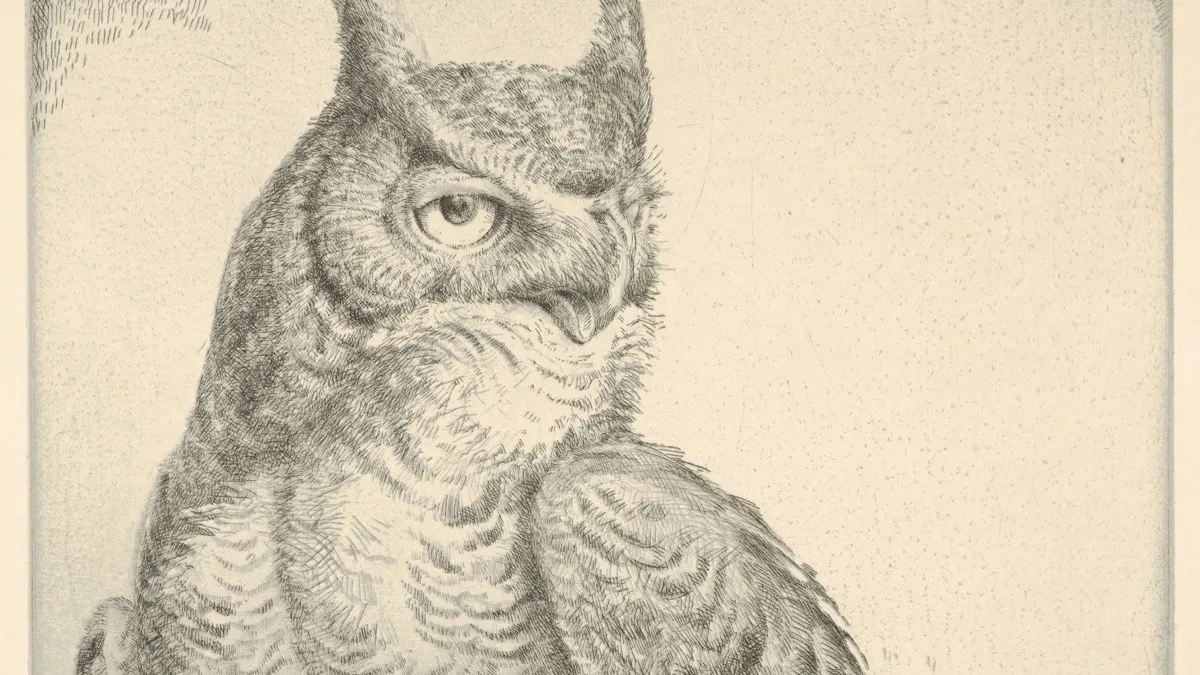
- Cover image: Henry Emerson Tuttle, CC0, via Wikimedia Commons
Edited by Rodrigo Cornejo. How we select and verify: who writes these notes.