What happened
- German company Orbital Matter said its Replicator 2 satellite 3D-printed a rigid beam half a metre long in orbit. TechCrunch published it on 3 November 2026.
- According to its executives, it is the first time a free-flying spacecraft has built such a structure in the vacuum of space. Earlier attempts at printing in microgravity took place inside the pressurised environment of the International Space Station.
- The satellite reached orbit this year on a SpaceX rideshare launch, with four printers on board. Each builds a cylindrical beam by extruding coils of resin that harden under ultraviolet light.
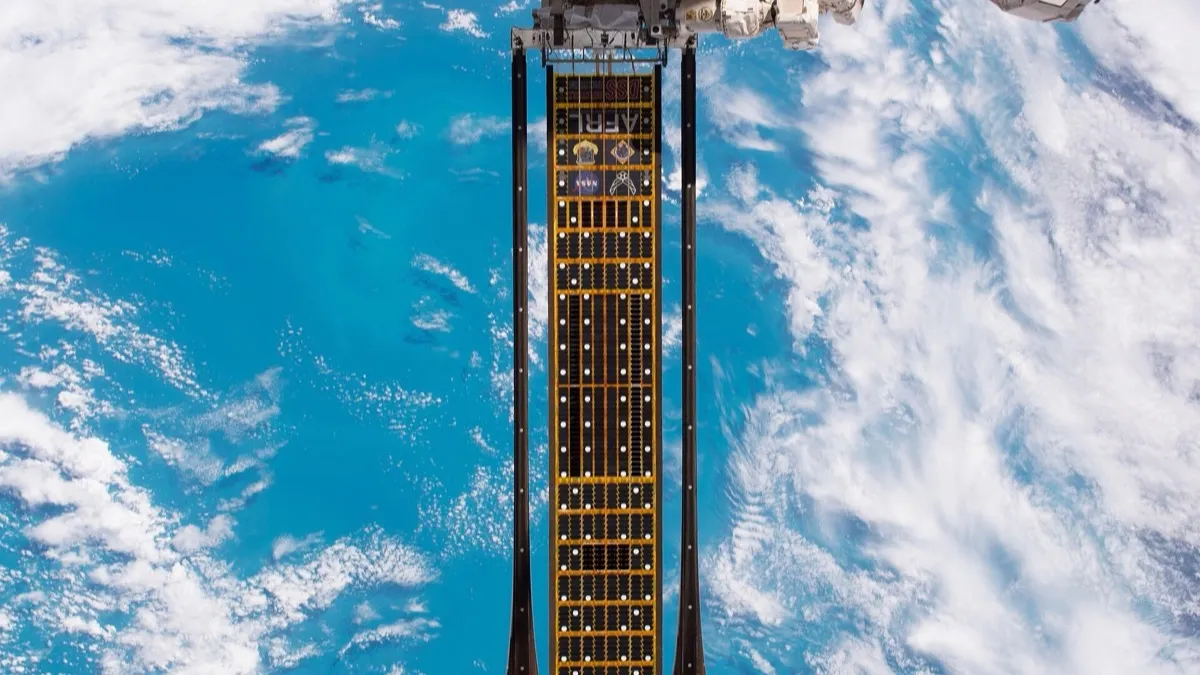
- Two of the printers were designed to deploy a flexible solar panel. One failed because of an anomaly, but the other’s beam deployed the panel.
Why it matters
- Satellites that need more power, or to shed more heat, such as those proposed for orbital data centres, require larger panels and radiators. But everything must fit inside the rocket fairing.
- Today large space structures are folded like origami and deployed in orbit, with hinges, latches and motors that add complexity and risk.
- If a satellite can build its own structure in orbit, size no longer depends on the rocket.
The number
100 metres. That is the beam length Orbital Matter’s engineers consider feasible; the limit is the amount of resin on board. The panels on SpaceX’s Starlink V2 satellites are 20 metres long, according to TechCrunch.
Context
“Replicator 2 is the first proof that we can simply build the array in space, at whatever size the mission demands,” said Jakub Stojek, chief executive and co-founder. The company works with ESA and with Thales Alenia, with which it collaborated on this satellite. Chief technology officer Robert Ihnatisin explained that they put several printers on one satellite to learn in orbit and adjust the software, rather than spend years testing every case on the ground. NASA previously funded a similar project with Redwire, which printed beams in a vacuum chamber in 2023 but never flew.
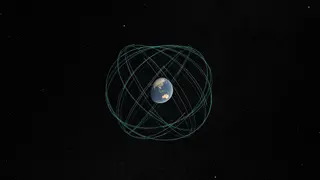
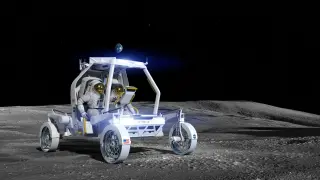
At Mamífero we follow industry in orbit and additive manufacturing. We reported that Google is sending its AI chips into orbit to escape the power limit and that Xona raised US$250 million for a low-orbit navigation network. In 3D printing, a one-metre titanium single crystal was printed, and in exploration, NASA updated the rovers for its lunar base.
What’s next
- Orbital Matter is preparing another mission for 2028 with a larger printer on a bigger satellite, aiming to deploy a 5-kilowatt solar panel.
- The next goal is wings of more than 100 kilowatts each by 2030.
- The company is in talks with satellite makers interested in adding its printer-assisted deployment system (PADS) to extend panels, antennas and other components.
Bottom line
Half a metre of resin sounds small, but it is a beam built and hardened in vacuum that did its job. If the method scales, satellites will stop folding to fit in the rocket and start being built where they operate.
Sources
- Fernholz, T., “Orbital Matter 3D-printed the first rigid beam in the vacuum of space”, TechCrunch, 3 November 2026, techcrunch.com
- Orbital Matter, description of the PADS system, orbitalmatter.com. The company did not publish a readable release of its own on the mission; the data come from its executives as quoted by TechCrunch.
- Cover image: NASA, public domain, via Wikimedia Commons
Edited by Rodrigo Cornejo. How we select and verify: who writes these notes.